User login
Iron overload aids potentially deadly bacteria

Credit: Paul A. Gulig
Researchers say they’ve determined why patients with hereditary hemochromatosis are so vulnerable to severe illness from Vibrio vulnificus infection.
Patients with hereditary hemochromatosis have a deficiency of the iron-regulating hormone hepcidin and therefore develop excess iron in their blood and tissue, providing prime growth conditions for Vibrio vulnificus.
The researchers also showed that minihepcidin, a medicinal form of the hormone hepcidin that lowers iron levels in blood, could cure the infection by restricting bacterial growth.
The findings appear in Cell Host and Microbe.
“This is the first time that the association of hepcidin deficiency and susceptibility to Vibrio vulnificus infection was tested,” said study author Yonca Bulut, MD, of the David Geffen School of Medicine at UCLA in Los Angeles.
“The dramatic effectiveness of the new treatment, even after the infection was established, was impressive.”
To conduct this study, Dr Bulut and her colleagues compared the fatality of Vibrio vulnificus infection in healthy mice with mice that lacked hepcidin, modeling human hereditary hemochromatosis.
The infection was much more lethal in hepcidin-deficient mice because their bodies could not decrease iron levels in the blood in response to infection, a process mediated by hepcidin in healthy mice.
Giving minihepcidin to hepcidin-deficient mice prevented infection if the hormone was given before Vibrio vulnificus was introduced. And mice given minihepcidin 3 hours after the bacterium was introduced were cured of any infection.
“We found that hepcidin is required for resistance to a Vibrio vulnificus infection,” said study author Joao Arezes, a graduate student from the University of Porto in Portugal.
“The development of the treatment tested in mouse models could reduce the high mortality rate of this disease.”
The next stage of this research is to investigate why Vibrio vulnificus bacteria become so lethal when iron levels are high, and to learn which other microbes respond similarly to excess iron. 
Credit: Paul A. Gulig
Researchers say they’ve determined why patients with hereditary hemochromatosis are so vulnerable to severe illness from Vibrio vulnificus infection.
Patients with hereditary hemochromatosis have a deficiency of the iron-regulating hormone hepcidin and therefore develop excess iron in their blood and tissue, providing prime growth conditions for Vibrio vulnificus.
The researchers also showed that minihepcidin, a medicinal form of the hormone hepcidin that lowers iron levels in blood, could cure the infection by restricting bacterial growth.
The findings appear in Cell Host and Microbe.
“This is the first time that the association of hepcidin deficiency and susceptibility to Vibrio vulnificus infection was tested,” said study author Yonca Bulut, MD, of the David Geffen School of Medicine at UCLA in Los Angeles.
“The dramatic effectiveness of the new treatment, even after the infection was established, was impressive.”
To conduct this study, Dr Bulut and her colleagues compared the fatality of Vibrio vulnificus infection in healthy mice with mice that lacked hepcidin, modeling human hereditary hemochromatosis.
The infection was much more lethal in hepcidin-deficient mice because their bodies could not decrease iron levels in the blood in response to infection, a process mediated by hepcidin in healthy mice.
Giving minihepcidin to hepcidin-deficient mice prevented infection if the hormone was given before Vibrio vulnificus was introduced. And mice given minihepcidin 3 hours after the bacterium was introduced were cured of any infection.
“We found that hepcidin is required for resistance to a Vibrio vulnificus infection,” said study author Joao Arezes, a graduate student from the University of Porto in Portugal.
“The development of the treatment tested in mouse models could reduce the high mortality rate of this disease.”
The next stage of this research is to investigate why Vibrio vulnificus bacteria become so lethal when iron levels are high, and to learn which other microbes respond similarly to excess iron.
Credit: Paul A. Gulig
Researchers say they’ve determined why patients with hereditary hemochromatosis are so vulnerable to severe illness from Vibrio vulnificus infection.
Patients with hereditary hemochromatosis have a deficiency of the iron-regulating hormone hepcidin and therefore develop excess iron in their blood and tissue, providing prime growth conditions for Vibrio vulnificus.
The researchers also showed that minihepcidin, a medicinal form of the hormone hepcidin that lowers iron levels in blood, could cure the infection by restricting bacterial growth.
The findings appear in Cell Host and Microbe.
“This is the first time that the association of hepcidin deficiency and susceptibility to Vibrio vulnificus infection was tested,” said study author Yonca Bulut, MD, of the David Geffen School of Medicine at UCLA in Los Angeles.
“The dramatic effectiveness of the new treatment, even after the infection was established, was impressive.”
To conduct this study, Dr Bulut and her colleagues compared the fatality of Vibrio vulnificus infection in healthy mice with mice that lacked hepcidin, modeling human hereditary hemochromatosis.
The infection was much more lethal in hepcidin-deficient mice because their bodies could not decrease iron levels in the blood in response to infection, a process mediated by hepcidin in healthy mice.
Giving minihepcidin to hepcidin-deficient mice prevented infection if the hormone was given before Vibrio vulnificus was introduced. And mice given minihepcidin 3 hours after the bacterium was introduced were cured of any infection.
“We found that hepcidin is required for resistance to a Vibrio vulnificus infection,” said study author Joao Arezes, a graduate student from the University of Porto in Portugal.
“The development of the treatment tested in mouse models could reduce the high mortality rate of this disease.”
The next stage of this research is to investigate why Vibrio vulnificus bacteria become so lethal when iron levels are high, and to learn which other microbes respond similarly to excess iron.
US is leading sponsor of medical research despite slow growth in funding

Credit: Rhoda Baer
An analysis of countries in North America, Europe, and Asia-Oceania showed that the US had the slowest annual growth in medical research funding from 2004 to 2011.
Nevertheless, the US was the leading sponsor of global medical research in 2011, accounting for 44% of the $265 billion spent in all the regions studied.
Hamilton Moses III, MD, of the Alerion Institute and Alerion Advisors LLC, in North Garden, Virginia, and his colleagues reported these discoveries in JAMA.
The researchers examined developments over the past 2 decades in the pattern of who conducts and who supports medical research, as well as resulting patents, publications, and new drug and device approvals.
The group compiled publicly available data from 1994 to 2012, showing trends in US and international research funding, productivity, and disease burden by source and industry type. Patents and publications (1981-2011) were evaluated using citation rates and impact factors.
International research funding
The researchers included data from the major countries of North America (US and Canada), Europe (including the 10 largest European countries in the
Organisation for Economic Co-operation and Development), and Asia-Oceania (Australia, China, India, Japan, Singapore, and South Korea).
Of these regions, the US had the lowest rate of annual growth in funding from 2004 to 2011 (1%). The rate was 4.1% in Europe, 4.5% in Canada, 6.8% in Japan, 9.3% in Australia, 16.9% in China, and 20.8% in the other Asian countries.
Still, in 2011, the US invested $117.2 billion (44%) of the $265 billion spent in all the regions studied. Europe spent $88.6 billion (33%), Japan spent $37.8 billion (14%), China spent $4.9 billion (1.2%), other Asian countries spent $9.7 billion (4%), Australia spent $3.8 billion (1.4%), and Canada spent $3.1 billion (1.2%).
Research outcomes
Dr Moses and his colleagues also compared other aspects of medical research among the regions, such as patent applications, research articles, and drug approvals.
They found that China filed 30% of global life science patent applications in 2011, while the US filed 24%. Japan filed the fewest applications of all the
regions analyzed.
The US and the European Union were neck-and-neck with regard to the share of biomedical research articles published in all regions in 2009—33.4% and 32.8%, respectively. China’s share was only 5%, but the country had the greatestgrowth in contribution from 2000 through 2009, at 18.7%.
And the European Medicines Agency (EMA) outstripped the US Food and Drug Administration (FDA) when it came to drug approvals. In 2013, the EMA approved 57 new molecular entities and biologics, compared to the FDA’s 27. From 2003 to2013, the FDA averaged 26 approvals per year, and the EMA averaged 42.
Credit: Rhoda Baer
An analysis of countries in North America, Europe, and Asia-Oceania showed that the US had the slowest annual growth in medical research funding from 2004 to 2011.
Nevertheless, the US was the leading sponsor of global medical research in 2011, accounting for 44% of the $265 billion spent in all the regions studied.
Hamilton Moses III, MD, of the Alerion Institute and Alerion Advisors LLC, in North Garden, Virginia, and his colleagues reported these discoveries in JAMA.
The researchers examined developments over the past 2 decades in the pattern of who conducts and who supports medical research, as well as resulting patents, publications, and new drug and device approvals.
The group compiled publicly available data from 1994 to 2012, showing trends in US and international research funding, productivity, and disease burden by source and industry type. Patents and publications (1981-2011) were evaluated using citation rates and impact factors.
International research funding
The researchers included data from the major countries of North America (US and Canada), Europe (including the 10 largest European countries in the
Organisation for Economic Co-operation and Development), and Asia-Oceania (Australia, China, India, Japan, Singapore, and South Korea).
Of these regions, the US had the lowest rate of annual growth in funding from 2004 to 2011 (1%). The rate was 4.1% in Europe, 4.5% in Canada, 6.8% in Japan, 9.3% in Australia, 16.9% in China, and 20.8% in the other Asian countries.
Still, in 2011, the US invested $117.2 billion (44%) of the $265 billion spent in all the regions studied. Europe spent $88.6 billion (33%), Japan spent $37.8 billion (14%), China spent $4.9 billion (1.2%), other Asian countries spent $9.7 billion (4%), Australia spent $3.8 billion (1.4%), and Canada spent $3.1 billion (1.2%).
Research outcomes
Dr Moses and his colleagues also compared other aspects of medical research among the regions, such as patent applications, research articles, and drug approvals.
They found that China filed 30% of global life science patent applications in 2011, while the US filed 24%. Japan filed the fewest applications of all the
regions analyzed.
The US and the European Union were neck-and-neck with regard to the share of biomedical research articles published in all regions in 2009—33.4% and 32.8%, respectively. China’s share was only 5%, but the country had the greatestgrowth in contribution from 2000 through 2009, at 18.7%.
And the European Medicines Agency (EMA) outstripped the US Food and Drug Administration (FDA) when it came to drug approvals. In 2013, the EMA approved 57 new molecular entities and biologics, compared to the FDA’s 27. From 2003 to2013, the FDA averaged 26 approvals per year, and the EMA averaged 42.
Credit: Rhoda Baer
An analysis of countries in North America, Europe, and Asia-Oceania showed that the US had the slowest annual growth in medical research funding from 2004 to 2011.
Nevertheless, the US was the leading sponsor of global medical research in 2011, accounting for 44% of the $265 billion spent in all the regions studied.
Hamilton Moses III, MD, of the Alerion Institute and Alerion Advisors LLC, in North Garden, Virginia, and his colleagues reported these discoveries in JAMA.
The researchers examined developments over the past 2 decades in the pattern of who conducts and who supports medical research, as well as resulting patents, publications, and new drug and device approvals.
The group compiled publicly available data from 1994 to 2012, showing trends in US and international research funding, productivity, and disease burden by source and industry type. Patents and publications (1981-2011) were evaluated using citation rates and impact factors.
International research funding
The researchers included data from the major countries of North America (US and Canada), Europe (including the 10 largest European countries in the
Organisation for Economic Co-operation and Development), and Asia-Oceania (Australia, China, India, Japan, Singapore, and South Korea).
Of these regions, the US had the lowest rate of annual growth in funding from 2004 to 2011 (1%). The rate was 4.1% in Europe, 4.5% in Canada, 6.8% in Japan, 9.3% in Australia, 16.9% in China, and 20.8% in the other Asian countries.
Still, in 2011, the US invested $117.2 billion (44%) of the $265 billion spent in all the regions studied. Europe spent $88.6 billion (33%), Japan spent $37.8 billion (14%), China spent $4.9 billion (1.2%), other Asian countries spent $9.7 billion (4%), Australia spent $3.8 billion (1.4%), and Canada spent $3.1 billion (1.2%).
Research outcomes
Dr Moses and his colleagues also compared other aspects of medical research among the regions, such as patent applications, research articles, and drug approvals.
They found that China filed 30% of global life science patent applications in 2011, while the US filed 24%. Japan filed the fewest applications of all the
regions analyzed.
The US and the European Union were neck-and-neck with regard to the share of biomedical research articles published in all regions in 2009—33.4% and 32.8%, respectively. China’s share was only 5%, but the country had the greatestgrowth in contribution from 2000 through 2009, at 18.7%.
And the European Medicines Agency (EMA) outstripped the US Food and Drug Administration (FDA) when it came to drug approvals. In 2013, the EMA approved 57 new molecular entities and biologics, compared to the FDA’s 27. From 2003 to2013, the FDA averaged 26 approvals per year, and the EMA averaged 42.
NHS cuts 5 blood cancer drugs from CDF, adds 1

Credit: Steven Harbour
The National Health Service (NHS) has increased the budget for England’s Cancer Drugs Fund (CDF) and added a new drug to treat 2 hematologic malignancies, but 5 other blood cancer drugs will be removed from the fund in March.
The budget for the CDF will grow from £200 million in 2013/14 to £280 million in 2014/15.
However, 16 drugs (for 25 different indications) will no longer be offered through the fund as of March 12, 2015.
Still, the NHS said it has taken steps to ensure patients can receive appropriate treatment.
Review leads to cuts
A national panel of oncologists, pharmacists, and patient representatives independently reviewed the drug indications currently available through the CDF, plus new applications.
They evaluated the clinical benefit, survival, quality of life, toxicity, and safety associated with each treatment, as well as the level of unmet need and the median cost per patient. In cases where the high cost of a drug would lead to its exclusion from CDF, manufacturers were given an opportunity to reduce prices.
The result of the review is that 59 of the 84 most effective currently approved indications of drugs will rollover into the CDF next year, creating room for new drug indications that will be funded for the first time.
These are panitumumab for bowel cancer, ibrutinib for mantle cell lymphoma, and ibrutinib for chronic lymphocytic leukemia.
However, 16 drugs, including 5 blood cancer drugs—bendamustine, bortezomib, bosutinib, dasatinib, and ofatumumab—will no longer be offered through the CDF.
Following these changes, the NHS will put 4 measures in place to ensure patients can receive appropriate treatment. First, any patient currently receiving a drug through the CDF will continue to receive it, regardless of whether it remains in the CDF.
Second, drugs that are the only therapy for the cancer in question will remain available through the CDF. Third, if the CDF panel removes a drug for a particular indication, some patients may instead be able to receive it in another line of therapy or receive an alternative CDF-approved drug.
And finally, clinicians can apply for their patient to receive a drug not available through the CDF on an exceptional basis.
Cuts to blood cancer drugs
The full list of cuts to the CDF is available on the NHS website, but the following list includes all drugs for hematologic malignancies that will no longer be available. These drugs will still be available for other indications, however.
- Bendamustine for the treatment of low-grade lymphoma that is refractory to rituximab alone or in combination.
- Bortezomib for the treatment of:
- relapsed/refractory mantle cell lymphoma after 1 or more prior chemotherapies or stem cell transplant
- relapsed multiple myeloma patients with a previous partial response or complete response of 6 months or more with bortezomib
- relapsed Waldenstrom’s macroglobulinemia patients who received previous treatment with alkylating agents and purine analogues.
- Bosutinib for the treatment of:
- blast crisis chronic myeloid leukemia (CML) that is refractory to nilotinib or dasatinib if dasatinib was accessed via a clinical trial or via its current approved CDF indication
- blast crisis CML where there is treatment intolerance, specifically, significant intolerance to dasatinib (grade 3 or 4 adverse events) if dasatinib was accessed via its current approved CDF indication.
- Dasatinib for the treatment of lymphoid, blast crisis CML that is refractory to, significantly intolerant of, or resistant to prior therapy including imatinib (grade 3 or 4 adverse events); also when used as the 2nd- or 3rd-line treatment.
- Ofatumumab for the treatment of CML as the 2nd- or 3rd-line indication and if the patient is refractory to treatment with fludarabine in combination and/or alemtuzumab or if treatment with fludarabine in combination and/or alemtuzumab is contraindicated.
More about the CDF and the NHS
The CDF—set up in 2010 and currently due to run until March 2016—is money the government has set aside to pay for cancer drugs that haven’t been approved by the National Institute for Health and Care Excellence (NICE) and aren’t available within the NHS in England. Most cancer drugs are routinely funded outside of the CDF.
NHS England said it is working with cancer charities, the pharmaceutical industry, and NICE to create a sustainable model for the commissioning of chemotherapy. The agency has also updated its procedures for evaluating drugs in the CDF, in an effort to ensure sustainability.
In addition, NHS England has set up an appeals process by which pharmaceutical companies can challenge the decision-making process.
And a newly assembled national taskforce, headed by Harpal Kumar, chief executive of Cancer Research UK, is set to produce a refreshed, 5-year cancer plan for the NHS.
Credit: Steven Harbour
The National Health Service (NHS) has increased the budget for England’s Cancer Drugs Fund (CDF) and added a new drug to treat 2 hematologic malignancies, but 5 other blood cancer drugs will be removed from the fund in March.
The budget for the CDF will grow from £200 million in 2013/14 to £280 million in 2014/15.
However, 16 drugs (for 25 different indications) will no longer be offered through the fund as of March 12, 2015.
Still, the NHS said it has taken steps to ensure patients can receive appropriate treatment.
Review leads to cuts
A national panel of oncologists, pharmacists, and patient representatives independently reviewed the drug indications currently available through the CDF, plus new applications.
They evaluated the clinical benefit, survival, quality of life, toxicity, and safety associated with each treatment, as well as the level of unmet need and the median cost per patient. In cases where the high cost of a drug would lead to its exclusion from CDF, manufacturers were given an opportunity to reduce prices.
The result of the review is that 59 of the 84 most effective currently approved indications of drugs will rollover into the CDF next year, creating room for new drug indications that will be funded for the first time.
These are panitumumab for bowel cancer, ibrutinib for mantle cell lymphoma, and ibrutinib for chronic lymphocytic leukemia.
However, 16 drugs, including 5 blood cancer drugs—bendamustine, bortezomib, bosutinib, dasatinib, and ofatumumab—will no longer be offered through the CDF.
Following these changes, the NHS will put 4 measures in place to ensure patients can receive appropriate treatment. First, any patient currently receiving a drug through the CDF will continue to receive it, regardless of whether it remains in the CDF.
Second, drugs that are the only therapy for the cancer in question will remain available through the CDF. Third, if the CDF panel removes a drug for a particular indication, some patients may instead be able to receive it in another line of therapy or receive an alternative CDF-approved drug.
And finally, clinicians can apply for their patient to receive a drug not available through the CDF on an exceptional basis.
Cuts to blood cancer drugs
The full list of cuts to the CDF is available on the NHS website, but the following list includes all drugs for hematologic malignancies that will no longer be available. These drugs will still be available for other indications, however.
- Bendamustine for the treatment of low-grade lymphoma that is refractory to rituximab alone or in combination.
- Bortezomib for the treatment of:
- relapsed/refractory mantle cell lymphoma after 1 or more prior chemotherapies or stem cell transplant
- relapsed multiple myeloma patients with a previous partial response or complete response of 6 months or more with bortezomib
- relapsed Waldenstrom’s macroglobulinemia patients who received previous treatment with alkylating agents and purine analogues.
- Bosutinib for the treatment of:
- blast crisis chronic myeloid leukemia (CML) that is refractory to nilotinib or dasatinib if dasatinib was accessed via a clinical trial or via its current approved CDF indication
- blast crisis CML where there is treatment intolerance, specifically, significant intolerance to dasatinib (grade 3 or 4 adverse events) if dasatinib was accessed via its current approved CDF indication.
- Dasatinib for the treatment of lymphoid, blast crisis CML that is refractory to, significantly intolerant of, or resistant to prior therapy including imatinib (grade 3 or 4 adverse events); also when used as the 2nd- or 3rd-line treatment.
- Ofatumumab for the treatment of CML as the 2nd- or 3rd-line indication and if the patient is refractory to treatment with fludarabine in combination and/or alemtuzumab or if treatment with fludarabine in combination and/or alemtuzumab is contraindicated.
More about the CDF and the NHS
The CDF—set up in 2010 and currently due to run until March 2016—is money the government has set aside to pay for cancer drugs that haven’t been approved by the National Institute for Health and Care Excellence (NICE) and aren’t available within the NHS in England. Most cancer drugs are routinely funded outside of the CDF.
NHS England said it is working with cancer charities, the pharmaceutical industry, and NICE to create a sustainable model for the commissioning of chemotherapy. The agency has also updated its procedures for evaluating drugs in the CDF, in an effort to ensure sustainability.
In addition, NHS England has set up an appeals process by which pharmaceutical companies can challenge the decision-making process.
And a newly assembled national taskforce, headed by Harpal Kumar, chief executive of Cancer Research UK, is set to produce a refreshed, 5-year cancer plan for the NHS.
Credit: Steven Harbour
The National Health Service (NHS) has increased the budget for England’s Cancer Drugs Fund (CDF) and added a new drug to treat 2 hematologic malignancies, but 5 other blood cancer drugs will be removed from the fund in March.
The budget for the CDF will grow from £200 million in 2013/14 to £280 million in 2014/15.
However, 16 drugs (for 25 different indications) will no longer be offered through the fund as of March 12, 2015.
Still, the NHS said it has taken steps to ensure patients can receive appropriate treatment.
Review leads to cuts
A national panel of oncologists, pharmacists, and patient representatives independently reviewed the drug indications currently available through the CDF, plus new applications.
They evaluated the clinical benefit, survival, quality of life, toxicity, and safety associated with each treatment, as well as the level of unmet need and the median cost per patient. In cases where the high cost of a drug would lead to its exclusion from CDF, manufacturers were given an opportunity to reduce prices.
The result of the review is that 59 of the 84 most effective currently approved indications of drugs will rollover into the CDF next year, creating room for new drug indications that will be funded for the first time.
These are panitumumab for bowel cancer, ibrutinib for mantle cell lymphoma, and ibrutinib for chronic lymphocytic leukemia.
However, 16 drugs, including 5 blood cancer drugs—bendamustine, bortezomib, bosutinib, dasatinib, and ofatumumab—will no longer be offered through the CDF.
Following these changes, the NHS will put 4 measures in place to ensure patients can receive appropriate treatment. First, any patient currently receiving a drug through the CDF will continue to receive it, regardless of whether it remains in the CDF.
Second, drugs that are the only therapy for the cancer in question will remain available through the CDF. Third, if the CDF panel removes a drug for a particular indication, some patients may instead be able to receive it in another line of therapy or receive an alternative CDF-approved drug.
And finally, clinicians can apply for their patient to receive a drug not available through the CDF on an exceptional basis.
Cuts to blood cancer drugs
The full list of cuts to the CDF is available on the NHS website, but the following list includes all drugs for hematologic malignancies that will no longer be available. These drugs will still be available for other indications, however.
- Bendamustine for the treatment of low-grade lymphoma that is refractory to rituximab alone or in combination.
- Bortezomib for the treatment of:
- relapsed/refractory mantle cell lymphoma after 1 or more prior chemotherapies or stem cell transplant
- relapsed multiple myeloma patients with a previous partial response or complete response of 6 months or more with bortezomib
- relapsed Waldenstrom’s macroglobulinemia patients who received previous treatment with alkylating agents and purine analogues.
- Bosutinib for the treatment of:
- blast crisis chronic myeloid leukemia (CML) that is refractory to nilotinib or dasatinib if dasatinib was accessed via a clinical trial or via its current approved CDF indication
- blast crisis CML where there is treatment intolerance, specifically, significant intolerance to dasatinib (grade 3 or 4 adverse events) if dasatinib was accessed via its current approved CDF indication.
- Dasatinib for the treatment of lymphoid, blast crisis CML that is refractory to, significantly intolerant of, or resistant to prior therapy including imatinib (grade 3 or 4 adverse events); also when used as the 2nd- or 3rd-line treatment.
- Ofatumumab for the treatment of CML as the 2nd- or 3rd-line indication and if the patient is refractory to treatment with fludarabine in combination and/or alemtuzumab or if treatment with fludarabine in combination and/or alemtuzumab is contraindicated.
More about the CDF and the NHS
The CDF—set up in 2010 and currently due to run until March 2016—is money the government has set aside to pay for cancer drugs that haven’t been approved by the National Institute for Health and Care Excellence (NICE) and aren’t available within the NHS in England. Most cancer drugs are routinely funded outside of the CDF.
NHS England said it is working with cancer charities, the pharmaceutical industry, and NICE to create a sustainable model for the commissioning of chemotherapy. The agency has also updated its procedures for evaluating drugs in the CDF, in an effort to ensure sustainability.
In addition, NHS England has set up an appeals process by which pharmaceutical companies can challenge the decision-making process.
And a newly assembled national taskforce, headed by Harpal Kumar, chief executive of Cancer Research UK, is set to produce a refreshed, 5-year cancer plan for the NHS.
Drug can increase survival in poor-risk AML
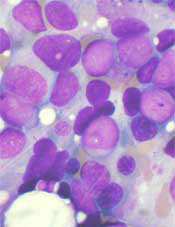
In a phase 2 trial, an investigational drug conferred a significant improvement in survival when used as salvage therapy in poor-risk patients with acute myeloid leukemia (AML).
On the other hand, the drug did not provide any significant improvements over control treatment (investigator’s choice) in the entire population of AML patients in first relapse.
The drug, CPX-351, is a fixed-ratio combination of cytarabine and daunorubicin inside a lipid vesicle.
Researchers reported these results with CPX-351 in Cancer. The study was funded by Celator Pharmaceuticals, the company developing CPX-351, and the Leukemia and Lymphoma Society.
“Patients with first-relapse AML have generally a poor prognosis, with a limited likelihood of response following salvage treatment,” said study author Jorge Cortes, MD, of the MD Anderson Cancer Center in Houston, Texas.
“This is particularly true for patients classified by the EPI [European Prognostic Index] as poor-risk upon entering the trial.”
For this trial, Dr Cortes and his colleagues evaluated 125 patients, ages 18 to 65, from 35 centers in the US, Canada, and Europe. Patients had AML in first relapse after an initial complete remission lasting a month or longer.
They were stratified per the EPI into favorable-, intermediate-, and poor-risk groups based on the duration of their first complete remission, cytogenetics, age, and transplant history. Most patients (68%) were in the poor-risk group.
Patients were randomized 2:1 to receive CPX-351 (100 units/m2 on days 1, 3, and 5 by 90-minute infusion) or the investigators’ choice of first salvage chemotherapy. The control treatment was usually based on cytarabine and an anthracycline, often with one or more additional agents.
Patient characteristics were largely well-balanced between the treatment arms. However, the CPX-351 group had a younger median age (52 years vs 56 years), more patients with secondary AML (12.3% vs 6.8%), and a higher rate of prior transplant (27.2% vs 15.9%).
Response and survival
Response rates were higher in the CPX-351 arm than in the control arm. The rates of complete response were 37% and 31.8%, respectively. And the rates of complete response with incomplete count recovery were 12.3% and 9.1%, respectively.
However, there was no significant difference in event-free survival (EFS) or overall survival (OS) between the treatment arms.
The median EFS was 4 months in the CPX-351 arm and 1.4 months in the control arm (hazard ratio[HR]=0.66, P=0.08). And the median OS was 8.5 months and 6.3 months, respectively (HR=0.75, P=0.19).
In the poor-risk population, there was no significant improvement in EFS with CPX-351, but there was a significant improvement in OS.
The median EFS was 1.8 months in the CPX-351 arm and 1.2 months in the control arm (HR=0.63, P=0.08). And the median OS was 6.5 months and 4.2 months, respectively (HR=0.55, P=0.02).
Safety and early mortality
The early mortality rate was similar between the treatment arms at 30 days—7.4% in the CPX-351 arm and 4.5% in the control arm—and at 60 days—14.8% and 15.9%, respectively. However, at 90 days, deaths were more frequent in the control arm—21.4% and 37.9%.
Patients in the CPX-351 arm had slower neutrophil recovery than those in the control arm—42 days and 34 days, respectively. The same was true for platelet recovery—45 days and 35 days, respectively.
Delayed hematologic recovery was associated with more infection-related events, such as febrile neutropenia, bacteremia, pneumonia, sepsis, urinary tract infection, pyrexia, and cellulitis.
The researchers believe these results, along with the previously published results from a phase 2 trial of CPX-351 in patients newly diagnosed with AML, support the phase 3 study of CPX-351 as a first-line therapy in older patients with high-risk (secondary) AML.
“We were very pleased to see promising response rates in this difficult-to-treat population,” Dr Cortes said. “And we eagerly await results from Celator’s pivotal phase 3 study of CPX-351, which could fulfill a considerable unmet need in AML.”
In a phase 2 trial, an investigational drug conferred a significant improvement in survival when used as salvage therapy in poor-risk patients with acute myeloid leukemia (AML).
On the other hand, the drug did not provide any significant improvements over control treatment (investigator’s choice) in the entire population of AML patients in first relapse.
The drug, CPX-351, is a fixed-ratio combination of cytarabine and daunorubicin inside a lipid vesicle.
Researchers reported these results with CPX-351 in Cancer. The study was funded by Celator Pharmaceuticals, the company developing CPX-351, and the Leukemia and Lymphoma Society.
“Patients with first-relapse AML have generally a poor prognosis, with a limited likelihood of response following salvage treatment,” said study author Jorge Cortes, MD, of the MD Anderson Cancer Center in Houston, Texas.
“This is particularly true for patients classified by the EPI [European Prognostic Index] as poor-risk upon entering the trial.”
For this trial, Dr Cortes and his colleagues evaluated 125 patients, ages 18 to 65, from 35 centers in the US, Canada, and Europe. Patients had AML in first relapse after an initial complete remission lasting a month or longer.
They were stratified per the EPI into favorable-, intermediate-, and poor-risk groups based on the duration of their first complete remission, cytogenetics, age, and transplant history. Most patients (68%) were in the poor-risk group.
Patients were randomized 2:1 to receive CPX-351 (100 units/m2 on days 1, 3, and 5 by 90-minute infusion) or the investigators’ choice of first salvage chemotherapy. The control treatment was usually based on cytarabine and an anthracycline, often with one or more additional agents.
Patient characteristics were largely well-balanced between the treatment arms. However, the CPX-351 group had a younger median age (52 years vs 56 years), more patients with secondary AML (12.3% vs 6.8%), and a higher rate of prior transplant (27.2% vs 15.9%).
Response and survival
Response rates were higher in the CPX-351 arm than in the control arm. The rates of complete response were 37% and 31.8%, respectively. And the rates of complete response with incomplete count recovery were 12.3% and 9.1%, respectively.
However, there was no significant difference in event-free survival (EFS) or overall survival (OS) between the treatment arms.
The median EFS was 4 months in the CPX-351 arm and 1.4 months in the control arm (hazard ratio[HR]=0.66, P=0.08). And the median OS was 8.5 months and 6.3 months, respectively (HR=0.75, P=0.19).
In the poor-risk population, there was no significant improvement in EFS with CPX-351, but there was a significant improvement in OS.
The median EFS was 1.8 months in the CPX-351 arm and 1.2 months in the control arm (HR=0.63, P=0.08). And the median OS was 6.5 months and 4.2 months, respectively (HR=0.55, P=0.02).
Safety and early mortality
The early mortality rate was similar between the treatment arms at 30 days—7.4% in the CPX-351 arm and 4.5% in the control arm—and at 60 days—14.8% and 15.9%, respectively. However, at 90 days, deaths were more frequent in the control arm—21.4% and 37.9%.
Patients in the CPX-351 arm had slower neutrophil recovery than those in the control arm—42 days and 34 days, respectively. The same was true for platelet recovery—45 days and 35 days, respectively.
Delayed hematologic recovery was associated with more infection-related events, such as febrile neutropenia, bacteremia, pneumonia, sepsis, urinary tract infection, pyrexia, and cellulitis.
The researchers believe these results, along with the previously published results from a phase 2 trial of CPX-351 in patients newly diagnosed with AML, support the phase 3 study of CPX-351 as a first-line therapy in older patients with high-risk (secondary) AML.
“We were very pleased to see promising response rates in this difficult-to-treat population,” Dr Cortes said. “And we eagerly await results from Celator’s pivotal phase 3 study of CPX-351, which could fulfill a considerable unmet need in AML.”
In a phase 2 trial, an investigational drug conferred a significant improvement in survival when used as salvage therapy in poor-risk patients with acute myeloid leukemia (AML).
On the other hand, the drug did not provide any significant improvements over control treatment (investigator’s choice) in the entire population of AML patients in first relapse.
The drug, CPX-351, is a fixed-ratio combination of cytarabine and daunorubicin inside a lipid vesicle.
Researchers reported these results with CPX-351 in Cancer. The study was funded by Celator Pharmaceuticals, the company developing CPX-351, and the Leukemia and Lymphoma Society.
“Patients with first-relapse AML have generally a poor prognosis, with a limited likelihood of response following salvage treatment,” said study author Jorge Cortes, MD, of the MD Anderson Cancer Center in Houston, Texas.
“This is particularly true for patients classified by the EPI [European Prognostic Index] as poor-risk upon entering the trial.”
For this trial, Dr Cortes and his colleagues evaluated 125 patients, ages 18 to 65, from 35 centers in the US, Canada, and Europe. Patients had AML in first relapse after an initial complete remission lasting a month or longer.
They were stratified per the EPI into favorable-, intermediate-, and poor-risk groups based on the duration of their first complete remission, cytogenetics, age, and transplant history. Most patients (68%) were in the poor-risk group.
Patients were randomized 2:1 to receive CPX-351 (100 units/m2 on days 1, 3, and 5 by 90-minute infusion) or the investigators’ choice of first salvage chemotherapy. The control treatment was usually based on cytarabine and an anthracycline, often with one or more additional agents.
Patient characteristics were largely well-balanced between the treatment arms. However, the CPX-351 group had a younger median age (52 years vs 56 years), more patients with secondary AML (12.3% vs 6.8%), and a higher rate of prior transplant (27.2% vs 15.9%).
Response and survival
Response rates were higher in the CPX-351 arm than in the control arm. The rates of complete response were 37% and 31.8%, respectively. And the rates of complete response with incomplete count recovery were 12.3% and 9.1%, respectively.
However, there was no significant difference in event-free survival (EFS) or overall survival (OS) between the treatment arms.
The median EFS was 4 months in the CPX-351 arm and 1.4 months in the control arm (hazard ratio[HR]=0.66, P=0.08). And the median OS was 8.5 months and 6.3 months, respectively (HR=0.75, P=0.19).
In the poor-risk population, there was no significant improvement in EFS with CPX-351, but there was a significant improvement in OS.
The median EFS was 1.8 months in the CPX-351 arm and 1.2 months in the control arm (HR=0.63, P=0.08). And the median OS was 6.5 months and 4.2 months, respectively (HR=0.55, P=0.02).
Safety and early mortality
The early mortality rate was similar between the treatment arms at 30 days—7.4% in the CPX-351 arm and 4.5% in the control arm—and at 60 days—14.8% and 15.9%, respectively. However, at 90 days, deaths were more frequent in the control arm—21.4% and 37.9%.
Patients in the CPX-351 arm had slower neutrophil recovery than those in the control arm—42 days and 34 days, respectively. The same was true for platelet recovery—45 days and 35 days, respectively.
Delayed hematologic recovery was associated with more infection-related events, such as febrile neutropenia, bacteremia, pneumonia, sepsis, urinary tract infection, pyrexia, and cellulitis.
The researchers believe these results, along with the previously published results from a phase 2 trial of CPX-351 in patients newly diagnosed with AML, support the phase 3 study of CPX-351 as a first-line therapy in older patients with high-risk (secondary) AML.
“We were very pleased to see promising response rates in this difficult-to-treat population,” Dr Cortes said. “And we eagerly await results from Celator’s pivotal phase 3 study of CPX-351, which could fulfill a considerable unmet need in AML.”
Protein may hold key to treating resistant lymphomas
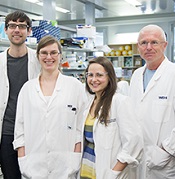
Stephanie Grabow, Liz Valente,
and Andreas Strasser
Photo courtesy of the
Walter and Eliza Hall Insitute
Targeting a cell survival protein could overcome treatment resistance in T-cell lymphomas, according to preclinical research published in Blood.
Investigators found that removing the pro-survival protein MCL-1 prompted the death of lymphoma cells that had become resistant to conventional treatments.
The team noted that half of all cancers become resistant to chemotherapy and radiotherapy by acquiring mutations in the tumor-suppressing p53 protein.
And their research showed that MCL-1 helps these cancer cells survive by subverting the normal process of apoptosis.
“There are several pro-survival proteins that promote the sustained survival of cancer cells; the challenge is to identify which one is the most important in keeping each type of cancer cell alive,” said Stephanie Grabow, PhD, of the Walter and Eliza Hall Institute of Medical Research in Victoria, Australia.
“When we removed MCL-1 in models of T-cell lymphoma that had ‘lost’ the tumor-suppressing protein p53, cancers could not develop, demonstrating that MCL-1 is critical for the development of T-cell lymphomas.”
“Previous work from our colleagues at the institute has shown that MCL-1 is also critical for the survival and therapy-resistance of other blood cancers, including B-cell lymphoma and acute myeloid leukemia, indicating that is a very important target for potential new anticancer treatments.”
So the new finding reinforces the need to develop compounds that specifically target MCL-1, said Andreas Strasser, PhD, also of the Walter and Eliza Hall Institute.
“Investigating the role of MCL-1 and other proteins involved in controlling apoptosis has shown that MCL-1 is a critical protein in the survival of many types of cancer cells,” he said. “Targeting MCL-1 could therefore allow us to develop new, urgently needed therapies to treat cancers that have stopped responding to other anticancer drugs.”
Dr Grabow said the researchers will continue to investigate the role of MCL-1 in the development and progression of other cancers.
“Finding new treatment targets is crucial if we are to reduce the impact of these diseases,” she concluded.
Stephanie Grabow, Liz Valente,
and Andreas Strasser
Photo courtesy of the
Walter and Eliza Hall Insitute
Targeting a cell survival protein could overcome treatment resistance in T-cell lymphomas, according to preclinical research published in Blood.
Investigators found that removing the pro-survival protein MCL-1 prompted the death of lymphoma cells that had become resistant to conventional treatments.
The team noted that half of all cancers become resistant to chemotherapy and radiotherapy by acquiring mutations in the tumor-suppressing p53 protein.
And their research showed that MCL-1 helps these cancer cells survive by subverting the normal process of apoptosis.
“There are several pro-survival proteins that promote the sustained survival of cancer cells; the challenge is to identify which one is the most important in keeping each type of cancer cell alive,” said Stephanie Grabow, PhD, of the Walter and Eliza Hall Institute of Medical Research in Victoria, Australia.
“When we removed MCL-1 in models of T-cell lymphoma that had ‘lost’ the tumor-suppressing protein p53, cancers could not develop, demonstrating that MCL-1 is critical for the development of T-cell lymphomas.”
“Previous work from our colleagues at the institute has shown that MCL-1 is also critical for the survival and therapy-resistance of other blood cancers, including B-cell lymphoma and acute myeloid leukemia, indicating that is a very important target for potential new anticancer treatments.”
So the new finding reinforces the need to develop compounds that specifically target MCL-1, said Andreas Strasser, PhD, also of the Walter and Eliza Hall Institute.
“Investigating the role of MCL-1 and other proteins involved in controlling apoptosis has shown that MCL-1 is a critical protein in the survival of many types of cancer cells,” he said. “Targeting MCL-1 could therefore allow us to develop new, urgently needed therapies to treat cancers that have stopped responding to other anticancer drugs.”
Dr Grabow said the researchers will continue to investigate the role of MCL-1 in the development and progression of other cancers.
“Finding new treatment targets is crucial if we are to reduce the impact of these diseases,” she concluded.
Stephanie Grabow, Liz Valente,
and Andreas Strasser
Photo courtesy of the
Walter and Eliza Hall Insitute
Targeting a cell survival protein could overcome treatment resistance in T-cell lymphomas, according to preclinical research published in Blood.
Investigators found that removing the pro-survival protein MCL-1 prompted the death of lymphoma cells that had become resistant to conventional treatments.
The team noted that half of all cancers become resistant to chemotherapy and radiotherapy by acquiring mutations in the tumor-suppressing p53 protein.
And their research showed that MCL-1 helps these cancer cells survive by subverting the normal process of apoptosis.
“There are several pro-survival proteins that promote the sustained survival of cancer cells; the challenge is to identify which one is the most important in keeping each type of cancer cell alive,” said Stephanie Grabow, PhD, of the Walter and Eliza Hall Institute of Medical Research in Victoria, Australia.
“When we removed MCL-1 in models of T-cell lymphoma that had ‘lost’ the tumor-suppressing protein p53, cancers could not develop, demonstrating that MCL-1 is critical for the development of T-cell lymphomas.”
“Previous work from our colleagues at the institute has shown that MCL-1 is also critical for the survival and therapy-resistance of other blood cancers, including B-cell lymphoma and acute myeloid leukemia, indicating that is a very important target for potential new anticancer treatments.”
So the new finding reinforces the need to develop compounds that specifically target MCL-1, said Andreas Strasser, PhD, also of the Walter and Eliza Hall Institute.
“Investigating the role of MCL-1 and other proteins involved in controlling apoptosis has shown that MCL-1 is a critical protein in the survival of many types of cancer cells,” he said. “Targeting MCL-1 could therefore allow us to develop new, urgently needed therapies to treat cancers that have stopped responding to other anticancer drugs.”
Dr Grabow said the researchers will continue to investigate the role of MCL-1 in the development and progression of other cancers.
“Finding new treatment targets is crucial if we are to reduce the impact of these diseases,” she concluded.
T-cell receptor ensures Treg functionality

Regulatory T cells (Tregs) need T-cell receptors to fulfill their protective functions, according to research published in Immunity.
The researchers knew that Tregs need T-cell receptors to develop properly, but they were unsure of the receptors’ role after that.
To find out, the team deactivated T-cell receptors on mature Tregs in genetically modified mice.
They found these defective Tregs were not able to carry out their protective function without the T-cell receptors.
Furthermore, the Treg pool fell significantly, as these cells were no longer multiplying.
However, the researchers also discovered that two of Tregs’ most well-known central molecular properties—the production of Foxp3 protein and specific chemical changes to DNA—were still present in the defective T cells.
“Without their receptor, the Tregs are still clearly identifiable as Tregs,” said study author Christoph Vahl, PhD, of the Max Planck Institute of Biochemistry in Martinsried, Germany.
“However, they lose a large part of their cellular identity. They also lose their special ability to suppress excessive immune reactions.”
“The Tregs obviously need continuous contact with their environment to function correctly. This is presumably the reason why they need a receptor that recognizes endogenous substances and continuously sends signals.”
“During the course of our research, we uncovered a very important mechanism for suppressing excessive responses and responses targeted against the human body,” added Marc Schmidt-Supprian, PhD, also of the Max Planck Institute.
“These findings could be relevant for situations where it would be beneficial to weaken the control of Tregs over immune responses—for example, in the treatment of cancer.”
Regulatory T cells (Tregs) need T-cell receptors to fulfill their protective functions, according to research published in Immunity.
The researchers knew that Tregs need T-cell receptors to develop properly, but they were unsure of the receptors’ role after that.
To find out, the team deactivated T-cell receptors on mature Tregs in genetically modified mice.
They found these defective Tregs were not able to carry out their protective function without the T-cell receptors.
Furthermore, the Treg pool fell significantly, as these cells were no longer multiplying.
However, the researchers also discovered that two of Tregs’ most well-known central molecular properties—the production of Foxp3 protein and specific chemical changes to DNA—were still present in the defective T cells.
“Without their receptor, the Tregs are still clearly identifiable as Tregs,” said study author Christoph Vahl, PhD, of the Max Planck Institute of Biochemistry in Martinsried, Germany.
“However, they lose a large part of their cellular identity. They also lose their special ability to suppress excessive immune reactions.”
“The Tregs obviously need continuous contact with their environment to function correctly. This is presumably the reason why they need a receptor that recognizes endogenous substances and continuously sends signals.”
“During the course of our research, we uncovered a very important mechanism for suppressing excessive responses and responses targeted against the human body,” added Marc Schmidt-Supprian, PhD, also of the Max Planck Institute.
“These findings could be relevant for situations where it would be beneficial to weaken the control of Tregs over immune responses—for example, in the treatment of cancer.”
Regulatory T cells (Tregs) need T-cell receptors to fulfill their protective functions, according to research published in Immunity.
The researchers knew that Tregs need T-cell receptors to develop properly, but they were unsure of the receptors’ role after that.
To find out, the team deactivated T-cell receptors on mature Tregs in genetically modified mice.
They found these defective Tregs were not able to carry out their protective function without the T-cell receptors.
Furthermore, the Treg pool fell significantly, as these cells were no longer multiplying.
However, the researchers also discovered that two of Tregs’ most well-known central molecular properties—the production of Foxp3 protein and specific chemical changes to DNA—were still present in the defective T cells.
“Without their receptor, the Tregs are still clearly identifiable as Tregs,” said study author Christoph Vahl, PhD, of the Max Planck Institute of Biochemistry in Martinsried, Germany.
“However, they lose a large part of their cellular identity. They also lose their special ability to suppress excessive immune reactions.”
“The Tregs obviously need continuous contact with their environment to function correctly. This is presumably the reason why they need a receptor that recognizes endogenous substances and continuously sends signals.”
“During the course of our research, we uncovered a very important mechanism for suppressing excessive responses and responses targeted against the human body,” added Marc Schmidt-Supprian, PhD, also of the Max Planck Institute.
“These findings could be relevant for situations where it would be beneficial to weaken the control of Tregs over immune responses—for example, in the treatment of cancer.”
Study reveals potential strategy to treat AML
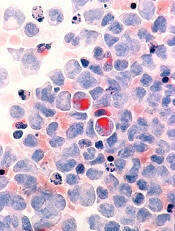
Credit: Lance Liotta
Researchers have discovered that interactions between two molecules—STAT3 and PRL-3—may provide a therapeutic target for acute myeloid leukemia (AML).
The team found evidence to suggest that the STAT3-PRL-3 regulatory loop contributes to the development of AML.
Chng Wee Joo, MB ChB, PhD, of the National University Cancer Institute in Singapore, and his colleagues reported these findings in Experimental Hematology.
The researchers discovered that STAT3, a transcription factor, binds and promotes the production of PRL-3 in cells. A decrease in STAT3 levels led to a corresponding decrease in the levels of PRL-3 and diminished the malignant properties of leukemic cells.
The team therefore concluded that a disruption of this regulatory loop may offer an attractive anti-AML therapeutic strategy. Furthermore, PRL-3 has the potential to be used as a biomarker in personalized therapy for AML patients.
The group was the first to report that the PRL-3 protein is overexpressed in 47% of bone marrow samples from AML patients. In addition, cellular levels of STAT3 were found to be elevated in about 50% of AML cases.
The researchers created a core STAT3 signature by analyzing datasets in the scientific literature. And they found that STAT3 core signature was significantly enriched in AML cases with high PRL-3 expression.
“Earlier studies on PRL-3 have been conducted in other cancers, but only in recent years has attention been turned to the significance of PRL-3 in blood cancer,” Dr Chng said.
“Previously, the mechanism by which PRL-3 is regulated in AML has also not been fully elucidated. This study reveals a novel connection between these two important oncogenes for the first time and also shows that the STAT3-PRL-3 regulatory loop contributes to the pathogenesis of AML.”
The researchers are now looking into methods to target the STAT3-PRL-3 pathway in AML, which could open up new avenues to treat AML patients with high expression of PRL-3 and offer an attractive anti-leukemia therapeutic strategy.
Credit: Lance Liotta
Researchers have discovered that interactions between two molecules—STAT3 and PRL-3—may provide a therapeutic target for acute myeloid leukemia (AML).
The team found evidence to suggest that the STAT3-PRL-3 regulatory loop contributes to the development of AML.
Chng Wee Joo, MB ChB, PhD, of the National University Cancer Institute in Singapore, and his colleagues reported these findings in Experimental Hematology.
The researchers discovered that STAT3, a transcription factor, binds and promotes the production of PRL-3 in cells. A decrease in STAT3 levels led to a corresponding decrease in the levels of PRL-3 and diminished the malignant properties of leukemic cells.
The team therefore concluded that a disruption of this regulatory loop may offer an attractive anti-AML therapeutic strategy. Furthermore, PRL-3 has the potential to be used as a biomarker in personalized therapy for AML patients.
The group was the first to report that the PRL-3 protein is overexpressed in 47% of bone marrow samples from AML patients. In addition, cellular levels of STAT3 were found to be elevated in about 50% of AML cases.
The researchers created a core STAT3 signature by analyzing datasets in the scientific literature. And they found that STAT3 core signature was significantly enriched in AML cases with high PRL-3 expression.
“Earlier studies on PRL-3 have been conducted in other cancers, but only in recent years has attention been turned to the significance of PRL-3 in blood cancer,” Dr Chng said.
“Previously, the mechanism by which PRL-3 is regulated in AML has also not been fully elucidated. This study reveals a novel connection between these two important oncogenes for the first time and also shows that the STAT3-PRL-3 regulatory loop contributes to the pathogenesis of AML.”
The researchers are now looking into methods to target the STAT3-PRL-3 pathway in AML, which could open up new avenues to treat AML patients with high expression of PRL-3 and offer an attractive anti-leukemia therapeutic strategy.
Credit: Lance Liotta
Researchers have discovered that interactions between two molecules—STAT3 and PRL-3—may provide a therapeutic target for acute myeloid leukemia (AML).
The team found evidence to suggest that the STAT3-PRL-3 regulatory loop contributes to the development of AML.
Chng Wee Joo, MB ChB, PhD, of the National University Cancer Institute in Singapore, and his colleagues reported these findings in Experimental Hematology.
The researchers discovered that STAT3, a transcription factor, binds and promotes the production of PRL-3 in cells. A decrease in STAT3 levels led to a corresponding decrease in the levels of PRL-3 and diminished the malignant properties of leukemic cells.
The team therefore concluded that a disruption of this regulatory loop may offer an attractive anti-AML therapeutic strategy. Furthermore, PRL-3 has the potential to be used as a biomarker in personalized therapy for AML patients.
The group was the first to report that the PRL-3 protein is overexpressed in 47% of bone marrow samples from AML patients. In addition, cellular levels of STAT3 were found to be elevated in about 50% of AML cases.
The researchers created a core STAT3 signature by analyzing datasets in the scientific literature. And they found that STAT3 core signature was significantly enriched in AML cases with high PRL-3 expression.
“Earlier studies on PRL-3 have been conducted in other cancers, but only in recent years has attention been turned to the significance of PRL-3 in blood cancer,” Dr Chng said.
“Previously, the mechanism by which PRL-3 is regulated in AML has also not been fully elucidated. This study reveals a novel connection between these two important oncogenes for the first time and also shows that the STAT3-PRL-3 regulatory loop contributes to the pathogenesis of AML.”
The researchers are now looking into methods to target the STAT3-PRL-3 pathway in AML, which could open up new avenues to treat AML patients with high expression of PRL-3 and offer an attractive anti-leukemia therapeutic strategy.
Survey reveals cancer survivors’ unmet needs

patient and her father
Credit: Rhoda Baer
New research shows that, even decades after being cured, many cancer survivors face challenges resulting from their disease and its treatment.
A survey of more than 1500 cancer survivors revealed 16 themes of challenges or unmet needs, such as physical dysfunction, financial problems, a lack of education about cancer survival, and anxiety about cancer recurrence.
Mary Ann Burg, PhD, of the University of Central Florida in Orlando, and her colleagues reported these findings in Cancer.
To assess the unmet needs of cancer survivors, the researchers evaluated responses from an American Cancer Society survey in which subjects responded to the open-ended question, “Please tell us about any needs you have now as a cancer survivor that are not being met to your satisfaction.”
There were a total of 1514 respondents who were 2, 5, or 10 years from cancer diagnosis. They were 24 to 97 years of age, 65.4% were female, and 24.8% were racial/ethnic minorities (black and Hispanic/Latino).
“This study was unique in that it gave a very large sample of cancer survivors a real voice to express their needs and concerns,” Dr Burg said.
The researchers found that the number and type of challenges/unmet needs were not associated with a subject’s time since cancer treatment, although older cancer survivors tended to report fewer unmet needs than younger survivors.
Sixteen themes of challenges/unmet needs emerged from respondents’ answers, with physical issues being the most common. About 38% of respondents reported physical issues, such as pain, symptoms, and sexual dysfunction.
About 20% reported financial problems, such as issues with insurance and the affordability of needed services and products. About 20% also said they had needs related to unanswered questions and a lack of knowledge about what to expect as a cancer survivor, including guidance on follow-up care and cancer risks, causes, and prevention.
About 16% of respondents cited issues relating to personal control (a lack of physical and social autonomy). And about 16% described flaws and constraints in the healthcare system that affected early detection, diagnosis, treatment, follow-up care, and continuity of care.
About 14% of respondents reported a lack of resources (such as supplies, equipment, and medications), and about 14% cited emotional and mental health issues (such as fear of cancer recurrence, depression, and anxiety).
About 13% of respondents said they lacked social support (such as access to support groups), and 10% reported issues relating to societal perceptions of cancer survivors (such as discrimination and misinformation).
About 9% of respondents expressed the need to talk about or explain the cancer experience with their physician, friends, and family. And about 9% cited a lack of trust in healthcare providers.
Other themes included the wish for more effective cancer treatments (3.5%), body image issues such as feeling unattractive or losing trust in the body (3.5%), issues with the “survivor” identity (3.1%), trouble obtaining or maintaining appropriate employment (2.3%), and existential issues, such as finding meaning in the cancer experience (0.6%).
“Overall, we found that cancer survivors are often caught off guard by the lingering problems they experience after cancer treatment,” Dr Burg said. “In the wake of cancer, many survivors feel they have lost a sense of personal control, have reduced quality of life, and are frustrated that these problems are not sufficiently addressed within the medical care system.”
She added that this study points to several areas in which we might work to improve the situation, including raising public awareness of cancer survivors’ problems, promoting honest professional communication about the side effects of cancer and its treatment, and coordinating medical care resources to help survivors and their families cope with lingering challenges.
patient and her father
Credit: Rhoda Baer
New research shows that, even decades after being cured, many cancer survivors face challenges resulting from their disease and its treatment.
A survey of more than 1500 cancer survivors revealed 16 themes of challenges or unmet needs, such as physical dysfunction, financial problems, a lack of education about cancer survival, and anxiety about cancer recurrence.
Mary Ann Burg, PhD, of the University of Central Florida in Orlando, and her colleagues reported these findings in Cancer.
To assess the unmet needs of cancer survivors, the researchers evaluated responses from an American Cancer Society survey in which subjects responded to the open-ended question, “Please tell us about any needs you have now as a cancer survivor that are not being met to your satisfaction.”
There were a total of 1514 respondents who were 2, 5, or 10 years from cancer diagnosis. They were 24 to 97 years of age, 65.4% were female, and 24.8% were racial/ethnic minorities (black and Hispanic/Latino).
“This study was unique in that it gave a very large sample of cancer survivors a real voice to express their needs and concerns,” Dr Burg said.
The researchers found that the number and type of challenges/unmet needs were not associated with a subject’s time since cancer treatment, although older cancer survivors tended to report fewer unmet needs than younger survivors.
Sixteen themes of challenges/unmet needs emerged from respondents’ answers, with physical issues being the most common. About 38% of respondents reported physical issues, such as pain, symptoms, and sexual dysfunction.
About 20% reported financial problems, such as issues with insurance and the affordability of needed services and products. About 20% also said they had needs related to unanswered questions and a lack of knowledge about what to expect as a cancer survivor, including guidance on follow-up care and cancer risks, causes, and prevention.
About 16% of respondents cited issues relating to personal control (a lack of physical and social autonomy). And about 16% described flaws and constraints in the healthcare system that affected early detection, diagnosis, treatment, follow-up care, and continuity of care.
About 14% of respondents reported a lack of resources (such as supplies, equipment, and medications), and about 14% cited emotional and mental health issues (such as fear of cancer recurrence, depression, and anxiety).
About 13% of respondents said they lacked social support (such as access to support groups), and 10% reported issues relating to societal perceptions of cancer survivors (such as discrimination and misinformation).
About 9% of respondents expressed the need to talk about or explain the cancer experience with their physician, friends, and family. And about 9% cited a lack of trust in healthcare providers.
Other themes included the wish for more effective cancer treatments (3.5%), body image issues such as feeling unattractive or losing trust in the body (3.5%), issues with the “survivor” identity (3.1%), trouble obtaining or maintaining appropriate employment (2.3%), and existential issues, such as finding meaning in the cancer experience (0.6%).
“Overall, we found that cancer survivors are often caught off guard by the lingering problems they experience after cancer treatment,” Dr Burg said. “In the wake of cancer, many survivors feel they have lost a sense of personal control, have reduced quality of life, and are frustrated that these problems are not sufficiently addressed within the medical care system.”
She added that this study points to several areas in which we might work to improve the situation, including raising public awareness of cancer survivors’ problems, promoting honest professional communication about the side effects of cancer and its treatment, and coordinating medical care resources to help survivors and their families cope with lingering challenges.
patient and her father
Credit: Rhoda Baer
New research shows that, even decades after being cured, many cancer survivors face challenges resulting from their disease and its treatment.
A survey of more than 1500 cancer survivors revealed 16 themes of challenges or unmet needs, such as physical dysfunction, financial problems, a lack of education about cancer survival, and anxiety about cancer recurrence.
Mary Ann Burg, PhD, of the University of Central Florida in Orlando, and her colleagues reported these findings in Cancer.
To assess the unmet needs of cancer survivors, the researchers evaluated responses from an American Cancer Society survey in which subjects responded to the open-ended question, “Please tell us about any needs you have now as a cancer survivor that are not being met to your satisfaction.”
There were a total of 1514 respondents who were 2, 5, or 10 years from cancer diagnosis. They were 24 to 97 years of age, 65.4% were female, and 24.8% were racial/ethnic minorities (black and Hispanic/Latino).
“This study was unique in that it gave a very large sample of cancer survivors a real voice to express their needs and concerns,” Dr Burg said.
The researchers found that the number and type of challenges/unmet needs were not associated with a subject’s time since cancer treatment, although older cancer survivors tended to report fewer unmet needs than younger survivors.
Sixteen themes of challenges/unmet needs emerged from respondents’ answers, with physical issues being the most common. About 38% of respondents reported physical issues, such as pain, symptoms, and sexual dysfunction.
About 20% reported financial problems, such as issues with insurance and the affordability of needed services and products. About 20% also said they had needs related to unanswered questions and a lack of knowledge about what to expect as a cancer survivor, including guidance on follow-up care and cancer risks, causes, and prevention.
About 16% of respondents cited issues relating to personal control (a lack of physical and social autonomy). And about 16% described flaws and constraints in the healthcare system that affected early detection, diagnosis, treatment, follow-up care, and continuity of care.
About 14% of respondents reported a lack of resources (such as supplies, equipment, and medications), and about 14% cited emotional and mental health issues (such as fear of cancer recurrence, depression, and anxiety).
About 13% of respondents said they lacked social support (such as access to support groups), and 10% reported issues relating to societal perceptions of cancer survivors (such as discrimination and misinformation).
About 9% of respondents expressed the need to talk about or explain the cancer experience with their physician, friends, and family. And about 9% cited a lack of trust in healthcare providers.
Other themes included the wish for more effective cancer treatments (3.5%), body image issues such as feeling unattractive or losing trust in the body (3.5%), issues with the “survivor” identity (3.1%), trouble obtaining or maintaining appropriate employment (2.3%), and existential issues, such as finding meaning in the cancer experience (0.6%).
“Overall, we found that cancer survivors are often caught off guard by the lingering problems they experience after cancer treatment,” Dr Burg said. “In the wake of cancer, many survivors feel they have lost a sense of personal control, have reduced quality of life, and are frustrated that these problems are not sufficiently addressed within the medical care system.”
She added that this study points to several areas in which we might work to improve the situation, including raising public awareness of cancer survivors’ problems, promoting honest professional communication about the side effects of cancer and its treatment, and coordinating medical care resources to help survivors and their families cope with lingering challenges.
‘Mother of bone marrow transplantation’ dies

husband, E. Donnall Thomas,
at a 2005 reunion of transplant
patients in Seattle
Photo by Jim Linna
Dorothy “Dottie” Thomas, the wife and research partner of 1990 Nobel laureate E. Donnall “Don” Thomas, MD, passed away on January 9 at the age of 92.
Don, pioneer of the bone marrow transplant (BMT), preceded Dottie in passing away himself on October 20, 2012, also at the age of 92.
The Thomases formed the core of a team that proved BMT could cure leukemias and other hematologic malignancies, work that spanned several decades.
Dottie may have gotten the name “the mother of bone marrow transplantation,” from the late George Santos, MD, a BMT expert at Johns Hopkins University School of Medicine in Baltimore, Maryland, and a colleague.
“If Dr Thomas is the father of bone marrow transplantation, then Dottie Thomas is the mother,” he once said.
“Dottie’s life had a profound impact, not just on those who knew her personally, but also countless patients,” said Gary Gilliland, MD, PhD, president and director of the Fred Hutchinson Cancer Research Center in Seattle, Washington, who became friends with the Thomases when he and Don served on the advisory board of the José Carreras Leukemia Foundation.
“She and Don were amazing together in both what they accomplished and the way they cared for each other. They were so sweet together. Now, their legacy continues through the many whose lives have been saved by bone marrow transplant and those who will be saved in the future. Dottie truly helped change the future of medicine. All of us at Fred Hutch are part of her legacy.”
A romantic partnership becomes a professional one
A snowball to the face during a rare Texas snowfall in 1940 precipitated a partnership in love and work between Don and Dottie that spanned 70 years.
“I was a senior at the University of Texas when she was a freshman,” Don told The Seattle Times in a 1999 interview. “I was waiting tables at the girls dormitory, which is how I got my food.”
“It snowed in Texas, which is very unusual. And I came out of the dormitory after we’d finished serving breakfast, and there was about 6 inches of snow. This girl whacked me in the face with a snowball. She still claims she was throwing it at another fellow and hit me by mistake. One thing led to another, and we seemed to hit it off.”
The couple married in December 1942. Dottie was a journalism major in college when, in March 1943, Don was admitted to Harvard University Medical School under a US Army program. Dottie got a job as a secretary with the Navy while Don attended medical school.
“Dottie and I talked it over, and we decided that if we were going to spend time together, which it turned out we liked to do, that she probably ought to change her profession,” Don told The Seattle Times. “She’d taken a lot of science in her time in school, much more than most journalists. She liked science.”
So Dottie left her Navy job and enrolled in the medical technology training program at New England Deaconess Hospital.
“Because Dottie was a hematology technician, we used to look at smears and bone marrow together when we were students,” Don said.
She worked as a medical technician for some doctors in Boston until Don had his own laboratory. Then, she began to work with him. She worked part-time when their children were small, but, otherwise, she was in the lab full-time with her husband.
“Dottie was there at Don’s side through every part of developing marrow transplantation as a science,” said Fred Appelbaum, MD, executive vice president and deputy director of the Fred Hutchinson Cancer Research Center.
“Besides raising 3 children together, Dottie was Don’s partner in every aspect of his professional life, from working in the laboratory to editing manuscripts and administering his research program.”
Dottie’s journalism training was a big asset to the team, according to Don.
“In the laboratory days, my friends pointed out that Dottie, who had the library experience, would go to the library and look up all the background information for a study that we were going to do, and then she would go into the laboratory and do the work and get the data, and then, with her writing skills, she’d write the paper and complete the bibliography,” Don recalled. “All I would do is sign the letter to the editor.”
The couple moved to Seattle in 1963. Don joined the Fred Hutchinson Cancer Research Center in 1975, the year its doors opened in Seattle’s First Hill neighborhood. For the next 15 years, Dottie served as the chief administrator for the Clinical Research Division. Don stepped down from the clinical leadership position in 1990 and retired from the center in 2002.
The Thomases are survived by 2 sons and a daughter, 8 grandchildren, and 2 great-grandchildren.
The family requests that people who wish to honor Dottie do so by contributing to Dottie’s Bridge, an endowment to assist young researchers.
husband, E. Donnall Thomas,
at a 2005 reunion of transplant
patients in Seattle
Photo by Jim Linna
Dorothy “Dottie” Thomas, the wife and research partner of 1990 Nobel laureate E. Donnall “Don” Thomas, MD, passed away on January 9 at the age of 92.
Don, pioneer of the bone marrow transplant (BMT), preceded Dottie in passing away himself on October 20, 2012, also at the age of 92.
The Thomases formed the core of a team that proved BMT could cure leukemias and other hematologic malignancies, work that spanned several decades.
Dottie may have gotten the name “the mother of bone marrow transplantation,” from the late George Santos, MD, a BMT expert at Johns Hopkins University School of Medicine in Baltimore, Maryland, and a colleague.
“If Dr Thomas is the father of bone marrow transplantation, then Dottie Thomas is the mother,” he once said.
“Dottie’s life had a profound impact, not just on those who knew her personally, but also countless patients,” said Gary Gilliland, MD, PhD, president and director of the Fred Hutchinson Cancer Research Center in Seattle, Washington, who became friends with the Thomases when he and Don served on the advisory board of the José Carreras Leukemia Foundation.
“She and Don were amazing together in both what they accomplished and the way they cared for each other. They were so sweet together. Now, their legacy continues through the many whose lives have been saved by bone marrow transplant and those who will be saved in the future. Dottie truly helped change the future of medicine. All of us at Fred Hutch are part of her legacy.”
A romantic partnership becomes a professional one
A snowball to the face during a rare Texas snowfall in 1940 precipitated a partnership in love and work between Don and Dottie that spanned 70 years.
“I was a senior at the University of Texas when she was a freshman,” Don told The Seattle Times in a 1999 interview. “I was waiting tables at the girls dormitory, which is how I got my food.”
“It snowed in Texas, which is very unusual. And I came out of the dormitory after we’d finished serving breakfast, and there was about 6 inches of snow. This girl whacked me in the face with a snowball. She still claims she was throwing it at another fellow and hit me by mistake. One thing led to another, and we seemed to hit it off.”
The couple married in December 1942. Dottie was a journalism major in college when, in March 1943, Don was admitted to Harvard University Medical School under a US Army program. Dottie got a job as a secretary with the Navy while Don attended medical school.
“Dottie and I talked it over, and we decided that if we were going to spend time together, which it turned out we liked to do, that she probably ought to change her profession,” Don told The Seattle Times. “She’d taken a lot of science in her time in school, much more than most journalists. She liked science.”
So Dottie left her Navy job and enrolled in the medical technology training program at New England Deaconess Hospital.
“Because Dottie was a hematology technician, we used to look at smears and bone marrow together when we were students,” Don said.
She worked as a medical technician for some doctors in Boston until Don had his own laboratory. Then, she began to work with him. She worked part-time when their children were small, but, otherwise, she was in the lab full-time with her husband.
“Dottie was there at Don’s side through every part of developing marrow transplantation as a science,” said Fred Appelbaum, MD, executive vice president and deputy director of the Fred Hutchinson Cancer Research Center.
“Besides raising 3 children together, Dottie was Don’s partner in every aspect of his professional life, from working in the laboratory to editing manuscripts and administering his research program.”
Dottie’s journalism training was a big asset to the team, according to Don.
“In the laboratory days, my friends pointed out that Dottie, who had the library experience, would go to the library and look up all the background information for a study that we were going to do, and then she would go into the laboratory and do the work and get the data, and then, with her writing skills, she’d write the paper and complete the bibliography,” Don recalled. “All I would do is sign the letter to the editor.”
The couple moved to Seattle in 1963. Don joined the Fred Hutchinson Cancer Research Center in 1975, the year its doors opened in Seattle’s First Hill neighborhood. For the next 15 years, Dottie served as the chief administrator for the Clinical Research Division. Don stepped down from the clinical leadership position in 1990 and retired from the center in 2002.
The Thomases are survived by 2 sons and a daughter, 8 grandchildren, and 2 great-grandchildren.
The family requests that people who wish to honor Dottie do so by contributing to Dottie’s Bridge, an endowment to assist young researchers.
husband, E. Donnall Thomas,
at a 2005 reunion of transplant
patients in Seattle
Photo by Jim Linna
Dorothy “Dottie” Thomas, the wife and research partner of 1990 Nobel laureate E. Donnall “Don” Thomas, MD, passed away on January 9 at the age of 92.
Don, pioneer of the bone marrow transplant (BMT), preceded Dottie in passing away himself on October 20, 2012, also at the age of 92.
The Thomases formed the core of a team that proved BMT could cure leukemias and other hematologic malignancies, work that spanned several decades.
Dottie may have gotten the name “the mother of bone marrow transplantation,” from the late George Santos, MD, a BMT expert at Johns Hopkins University School of Medicine in Baltimore, Maryland, and a colleague.
“If Dr Thomas is the father of bone marrow transplantation, then Dottie Thomas is the mother,” he once said.
“Dottie’s life had a profound impact, not just on those who knew her personally, but also countless patients,” said Gary Gilliland, MD, PhD, president and director of the Fred Hutchinson Cancer Research Center in Seattle, Washington, who became friends with the Thomases when he and Don served on the advisory board of the José Carreras Leukemia Foundation.
“She and Don were amazing together in both what they accomplished and the way they cared for each other. They were so sweet together. Now, their legacy continues through the many whose lives have been saved by bone marrow transplant and those who will be saved in the future. Dottie truly helped change the future of medicine. All of us at Fred Hutch are part of her legacy.”
A romantic partnership becomes a professional one
A snowball to the face during a rare Texas snowfall in 1940 precipitated a partnership in love and work between Don and Dottie that spanned 70 years.
“I was a senior at the University of Texas when she was a freshman,” Don told The Seattle Times in a 1999 interview. “I was waiting tables at the girls dormitory, which is how I got my food.”
“It snowed in Texas, which is very unusual. And I came out of the dormitory after we’d finished serving breakfast, and there was about 6 inches of snow. This girl whacked me in the face with a snowball. She still claims she was throwing it at another fellow and hit me by mistake. One thing led to another, and we seemed to hit it off.”
The couple married in December 1942. Dottie was a journalism major in college when, in March 1943, Don was admitted to Harvard University Medical School under a US Army program. Dottie got a job as a secretary with the Navy while Don attended medical school.
“Dottie and I talked it over, and we decided that if we were going to spend time together, which it turned out we liked to do, that she probably ought to change her profession,” Don told The Seattle Times. “She’d taken a lot of science in her time in school, much more than most journalists. She liked science.”
So Dottie left her Navy job and enrolled in the medical technology training program at New England Deaconess Hospital.
“Because Dottie was a hematology technician, we used to look at smears and bone marrow together when we were students,” Don said.
She worked as a medical technician for some doctors in Boston until Don had his own laboratory. Then, she began to work with him. She worked part-time when their children were small, but, otherwise, she was in the lab full-time with her husband.
“Dottie was there at Don’s side through every part of developing marrow transplantation as a science,” said Fred Appelbaum, MD, executive vice president and deputy director of the Fred Hutchinson Cancer Research Center.
“Besides raising 3 children together, Dottie was Don’s partner in every aspect of his professional life, from working in the laboratory to editing manuscripts and administering his research program.”
Dottie’s journalism training was a big asset to the team, according to Don.
“In the laboratory days, my friends pointed out that Dottie, who had the library experience, would go to the library and look up all the background information for a study that we were going to do, and then she would go into the laboratory and do the work and get the data, and then, with her writing skills, she’d write the paper and complete the bibliography,” Don recalled. “All I would do is sign the letter to the editor.”
The couple moved to Seattle in 1963. Don joined the Fred Hutchinson Cancer Research Center in 1975, the year its doors opened in Seattle’s First Hill neighborhood. For the next 15 years, Dottie served as the chief administrator for the Clinical Research Division. Don stepped down from the clinical leadership position in 1990 and retired from the center in 2002.
The Thomases are survived by 2 sons and a daughter, 8 grandchildren, and 2 great-grandchildren.
The family requests that people who wish to honor Dottie do so by contributing to Dottie’s Bridge, an endowment to assist young researchers.
Biopsies don’t promote cancer spread, group finds

A study of more than 2000 patients refutes the idea that biopsies cause cancer to spread.
In a study published in Gut, researchers showed that patients who received a biopsy had better overall survival and similar cancer-free survival rates as patients who did not have a biopsy.
The team studied pancreatic cancer but said their findings likely apply to other cancers because the diagnostic technique used in this study—fine needle aspiration—is commonly used across tumor types.
“This study shows that physicians and patients should feel reassured that a biopsy is very safe,” said study author Michael Wallace, MD, of the Mayo Clinic in Jacksonville, Florida.
“We do millions of biopsies of cancer a year in the US, but one or two case studies have led to this common myth that biopsies spread cancer.”
This is the second study Dr Wallace and his team have conducted to examine the risk of biopsy.
In a 2013 study published in Endoscopy, the researchers examined outcomes in 256 pancreatic cancer patients treated at the Mayo Clinic in Jacksonville. The team found no difference in cancer recurrence between 208 patients who had ultrasound-guided fine needle aspiration (EUS-FNA) and the 48 patients who did not have a biopsy.
In the current study, the researchers examined 11 years (1998-2009) of Medicare data on patients with non-metastatic pancreatic cancer who underwent surgery. The team examined overall survival and pancreatic cancer-specific survival in 498 patients who had EUS-FNA and in 1536 patients who did not have a biopsy.
During a mean follow-up time of 21 months, 285 patients (57%) in the EUS-FNA group and 1167 patients (76%) in the non-EUS-FNA group died. Pancreatic cancer was identified as the cause of death for 251 patients (50%) in the EUS-FNA group and 980 patients (64%) in the non-EUS-FNA group.
The median overall survival in the EUS-FNA group was 22 months, compared to 15 months in the non-EUS-FNA group. Multivariate analysis showed that receipt of EUS-FNA had a borderline significant association with improved overall survival (hazard ratio=0.84, P=0.03).
The median cancer-specific survival was 24 months in the EUS-FNA group and 18 months in the non-EUS-FNA group. Multivariate analysis revealed no significant difference between the two groups (hazard ratio=0.87, P=0.12).
“[Biopsies provide] very valuable information that allow us to tailor treatment,” Dr Wallace noted. “In some cases, we can offer chemotherapy and radiation before surgery for a better outcome, and, in other cases, we can avoid surgery and other therapy altogether.”
A study of more than 2000 patients refutes the idea that biopsies cause cancer to spread.
In a study published in Gut, researchers showed that patients who received a biopsy had better overall survival and similar cancer-free survival rates as patients who did not have a biopsy.
The team studied pancreatic cancer but said their findings likely apply to other cancers because the diagnostic technique used in this study—fine needle aspiration—is commonly used across tumor types.
“This study shows that physicians and patients should feel reassured that a biopsy is very safe,” said study author Michael Wallace, MD, of the Mayo Clinic in Jacksonville, Florida.
“We do millions of biopsies of cancer a year in the US, but one or two case studies have led to this common myth that biopsies spread cancer.”
This is the second study Dr Wallace and his team have conducted to examine the risk of biopsy.
In a 2013 study published in Endoscopy, the researchers examined outcomes in 256 pancreatic cancer patients treated at the Mayo Clinic in Jacksonville. The team found no difference in cancer recurrence between 208 patients who had ultrasound-guided fine needle aspiration (EUS-FNA) and the 48 patients who did not have a biopsy.
In the current study, the researchers examined 11 years (1998-2009) of Medicare data on patients with non-metastatic pancreatic cancer who underwent surgery. The team examined overall survival and pancreatic cancer-specific survival in 498 patients who had EUS-FNA and in 1536 patients who did not have a biopsy.
During a mean follow-up time of 21 months, 285 patients (57%) in the EUS-FNA group and 1167 patients (76%) in the non-EUS-FNA group died. Pancreatic cancer was identified as the cause of death for 251 patients (50%) in the EUS-FNA group and 980 patients (64%) in the non-EUS-FNA group.
The median overall survival in the EUS-FNA group was 22 months, compared to 15 months in the non-EUS-FNA group. Multivariate analysis showed that receipt of EUS-FNA had a borderline significant association with improved overall survival (hazard ratio=0.84, P=0.03).
The median cancer-specific survival was 24 months in the EUS-FNA group and 18 months in the non-EUS-FNA group. Multivariate analysis revealed no significant difference between the two groups (hazard ratio=0.87, P=0.12).
“[Biopsies provide] very valuable information that allow us to tailor treatment,” Dr Wallace noted. “In some cases, we can offer chemotherapy and radiation before surgery for a better outcome, and, in other cases, we can avoid surgery and other therapy altogether.”
A study of more than 2000 patients refutes the idea that biopsies cause cancer to spread.
In a study published in Gut, researchers showed that patients who received a biopsy had better overall survival and similar cancer-free survival rates as patients who did not have a biopsy.
The team studied pancreatic cancer but said their findings likely apply to other cancers because the diagnostic technique used in this study—fine needle aspiration—is commonly used across tumor types.
“This study shows that physicians and patients should feel reassured that a biopsy is very safe,” said study author Michael Wallace, MD, of the Mayo Clinic in Jacksonville, Florida.
“We do millions of biopsies of cancer a year in the US, but one or two case studies have led to this common myth that biopsies spread cancer.”
This is the second study Dr Wallace and his team have conducted to examine the risk of biopsy.
In a 2013 study published in Endoscopy, the researchers examined outcomes in 256 pancreatic cancer patients treated at the Mayo Clinic in Jacksonville. The team found no difference in cancer recurrence between 208 patients who had ultrasound-guided fine needle aspiration (EUS-FNA) and the 48 patients who did not have a biopsy.
In the current study, the researchers examined 11 years (1998-2009) of Medicare data on patients with non-metastatic pancreatic cancer who underwent surgery. The team examined overall survival and pancreatic cancer-specific survival in 498 patients who had EUS-FNA and in 1536 patients who did not have a biopsy.
During a mean follow-up time of 21 months, 285 patients (57%) in the EUS-FNA group and 1167 patients (76%) in the non-EUS-FNA group died. Pancreatic cancer was identified as the cause of death for 251 patients (50%) in the EUS-FNA group and 980 patients (64%) in the non-EUS-FNA group.
The median overall survival in the EUS-FNA group was 22 months, compared to 15 months in the non-EUS-FNA group. Multivariate analysis showed that receipt of EUS-FNA had a borderline significant association with improved overall survival (hazard ratio=0.84, P=0.03).
The median cancer-specific survival was 24 months in the EUS-FNA group and 18 months in the non-EUS-FNA group. Multivariate analysis revealed no significant difference between the two groups (hazard ratio=0.87, P=0.12).
“[Biopsies provide] very valuable information that allow us to tailor treatment,” Dr Wallace noted. “In some cases, we can offer chemotherapy and radiation before surgery for a better outcome, and, in other cases, we can avoid surgery and other therapy altogether.”