User login
It’s not too early to get ready for HM20
Hospitalist Benji K. Mathews, MD, SFHM, CLHM, will bring a unique commitment to medical education to HM20, which will be held next year on April 16-18 in San Diego.
Dr. Mathews enjoys receiving technological gadgets periodically at his home. Just ask his elementary school–age children: They’ve learned how to use handheld ultrasound devices on each other.
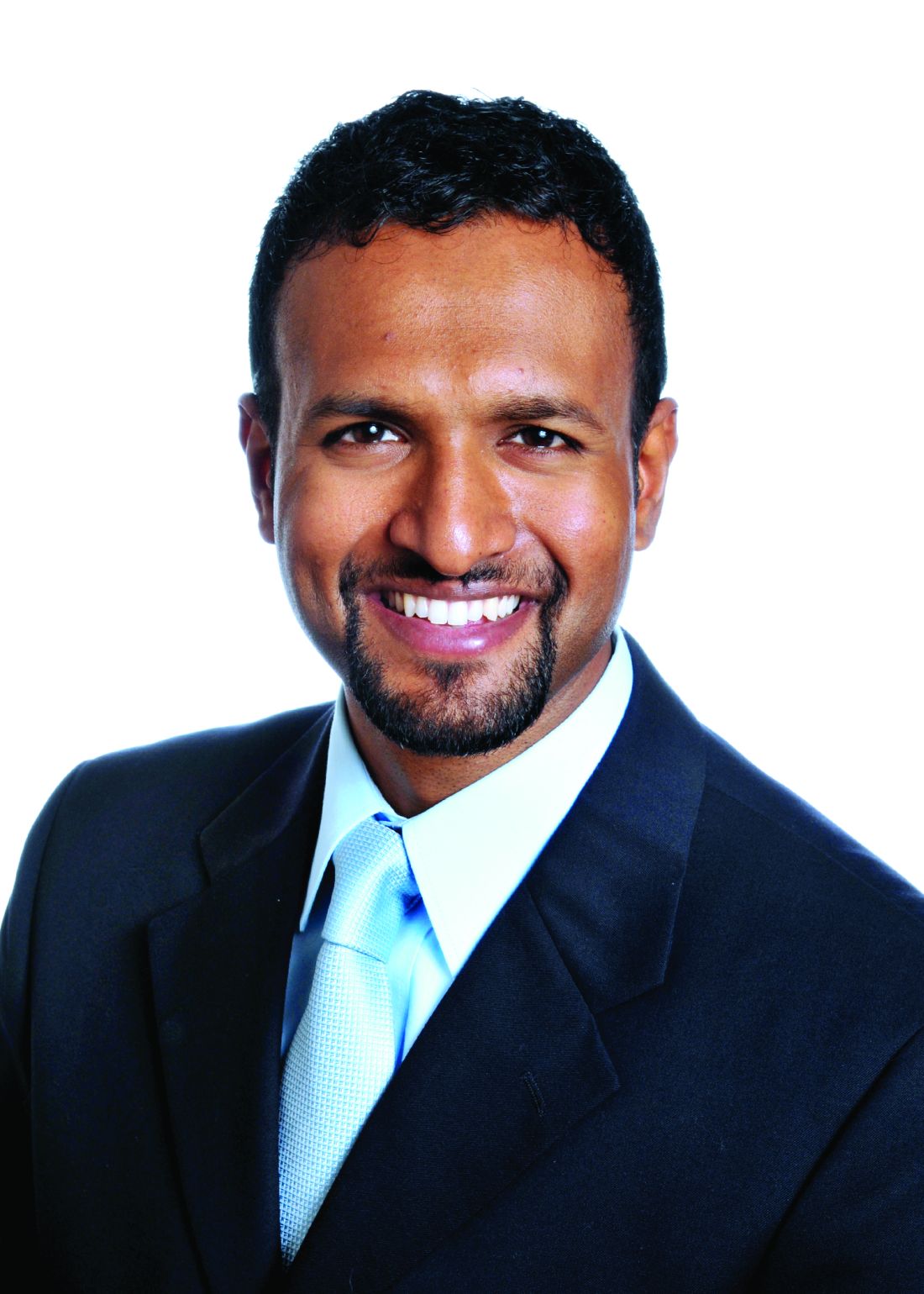
“They’re able to find their siblings’ kidneys and hearts,” said Dr. Mathews, an assistant professor of medicine at the University of Minnesota, Minneapolis, and a hospitalist with HealthPartners in Saint Paul, Minn. “I often show an image of this to encourage hospitalists that, if children can pick it up, highly educated providers can do the same and more!”
Society of Hospital Medicine members and nonmembers who would like to submit proposals for workshops and didactic sessions at HM20 must move quickly. “The open call for content opened in January 2019, providing enough time to prepare and submit,” Dr. Mathews said. “The HM20 call for content will stay open for 2 weeks after HM19 is wrapped up.”
Dr. Mathews expects HM20 will build upon the successes of this year’s conference and support SHM’s commitment to diversity in voices and programming. More than 4,000 attendees are expected.
“HM20 is a team effort with a diverse group serving on the annual meeting planning committee,” he said. “In conjunction with the submissions we receive from the open call, the Annual Conference Committee really builds on the momentum and feedback from attendees from the previous year’s annual meeting. We will identify popular sessions and topics and also review the data we receive from attendees about how they rated sessions and speakers. The chair and committee members will review all of these metrics and use them to plan HM20.”
Dr. Mathews said several topics will get special emphasis in 2020. “We would like to have more content for nurse practitioners and physician assistants and continued representation from the broad range of hospitalists throughout the nation in academic and community settings,” he said.
“We’re also hoping to provide more credit offerings in addition to those we now offer via the American Academy of Family Physicians and the American Osteopathic Association. Next year, we’re hoping to offer pharmacology credit.”
In addition, he said, “we hope to have focused content on diversity issues such as women in hospital medicine and gender and racial bias. We also plan to provide a continued focus on integration of work and life and topics in technology such as bedside ultrasound and telemedicine.”
Technology will be more than a topic at HM20. SHM plans to embrace it in the conference itself to a greater extent than ever before. “We hope to build an online interactive schedule so that attendees may search tracks by day and credit type and schedule their sessions ahead of time,” Dr. Mathews said. “There will still be a PDF schedule, but we hope to push a more interactive, paperless version. We also hope to have e-posters for the first time at HM20.”
The emphasis on technology is a perfect fit for Dr. Mathews, who’s a pioneer in the use of bedside ultrasound. “I was fortunate to be a part of a great residency program at the University of Minnesota Medical School, which started a hospital medicine pathway that had several nationally recognized hospital medicine leaders as mentors. I was lucky to work with several of them through the HealthPartners organization in Saint Paul, and that developed in me a further desire to practice hospital medicine,” he said. “The group and mentors provided opportunities to develop further niches in my practice. I took an interest in the field of improving diagnosis and combined it with the 21st-century innovative tool of bedside ultrasound. Now, I continue to teach clinicians, educators, and learners.”
Dr. Mathews has no relevant disclosures.
Hospitalist Benji K. Mathews, MD, SFHM, CLHM, will bring a unique commitment to medical education to HM20, which will be held next year on April 16-18 in San Diego.
Dr. Mathews enjoys receiving technological gadgets periodically at his home. Just ask his elementary school–age children: They’ve learned how to use handheld ultrasound devices on each other.
“They’re able to find their siblings’ kidneys and hearts,” said Dr. Mathews, an assistant professor of medicine at the University of Minnesota, Minneapolis, and a hospitalist with HealthPartners in Saint Paul, Minn. “I often show an image of this to encourage hospitalists that, if children can pick it up, highly educated providers can do the same and more!”
Society of Hospital Medicine members and nonmembers who would like to submit proposals for workshops and didactic sessions at HM20 must move quickly. “The open call for content opened in January 2019, providing enough time to prepare and submit,” Dr. Mathews said. “The HM20 call for content will stay open for 2 weeks after HM19 is wrapped up.”
Dr. Mathews expects HM20 will build upon the successes of this year’s conference and support SHM’s commitment to diversity in voices and programming. More than 4,000 attendees are expected.
“HM20 is a team effort with a diverse group serving on the annual meeting planning committee,” he said. “In conjunction with the submissions we receive from the open call, the Annual Conference Committee really builds on the momentum and feedback from attendees from the previous year’s annual meeting. We will identify popular sessions and topics and also review the data we receive from attendees about how they rated sessions and speakers. The chair and committee members will review all of these metrics and use them to plan HM20.”
Dr. Mathews said several topics will get special emphasis in 2020. “We would like to have more content for nurse practitioners and physician assistants and continued representation from the broad range of hospitalists throughout the nation in academic and community settings,” he said.
“We’re also hoping to provide more credit offerings in addition to those we now offer via the American Academy of Family Physicians and the American Osteopathic Association. Next year, we’re hoping to offer pharmacology credit.”
In addition, he said, “we hope to have focused content on diversity issues such as women in hospital medicine and gender and racial bias. We also plan to provide a continued focus on integration of work and life and topics in technology such as bedside ultrasound and telemedicine.”
Technology will be more than a topic at HM20. SHM plans to embrace it in the conference itself to a greater extent than ever before. “We hope to build an online interactive schedule so that attendees may search tracks by day and credit type and schedule their sessions ahead of time,” Dr. Mathews said. “There will still be a PDF schedule, but we hope to push a more interactive, paperless version. We also hope to have e-posters for the first time at HM20.”
The emphasis on technology is a perfect fit for Dr. Mathews, who’s a pioneer in the use of bedside ultrasound. “I was fortunate to be a part of a great residency program at the University of Minnesota Medical School, which started a hospital medicine pathway that had several nationally recognized hospital medicine leaders as mentors. I was lucky to work with several of them through the HealthPartners organization in Saint Paul, and that developed in me a further desire to practice hospital medicine,” he said. “The group and mentors provided opportunities to develop further niches in my practice. I took an interest in the field of improving diagnosis and combined it with the 21st-century innovative tool of bedside ultrasound. Now, I continue to teach clinicians, educators, and learners.”
Dr. Mathews has no relevant disclosures.
Hospitalist Benji K. Mathews, MD, SFHM, CLHM, will bring a unique commitment to medical education to HM20, which will be held next year on April 16-18 in San Diego.
Dr. Mathews enjoys receiving technological gadgets periodically at his home. Just ask his elementary school–age children: They’ve learned how to use handheld ultrasound devices on each other.
“They’re able to find their siblings’ kidneys and hearts,” said Dr. Mathews, an assistant professor of medicine at the University of Minnesota, Minneapolis, and a hospitalist with HealthPartners in Saint Paul, Minn. “I often show an image of this to encourage hospitalists that, if children can pick it up, highly educated providers can do the same and more!”
Society of Hospital Medicine members and nonmembers who would like to submit proposals for workshops and didactic sessions at HM20 must move quickly. “The open call for content opened in January 2019, providing enough time to prepare and submit,” Dr. Mathews said. “The HM20 call for content will stay open for 2 weeks after HM19 is wrapped up.”
Dr. Mathews expects HM20 will build upon the successes of this year’s conference and support SHM’s commitment to diversity in voices and programming. More than 4,000 attendees are expected.
“HM20 is a team effort with a diverse group serving on the annual meeting planning committee,” he said. “In conjunction with the submissions we receive from the open call, the Annual Conference Committee really builds on the momentum and feedback from attendees from the previous year’s annual meeting. We will identify popular sessions and topics and also review the data we receive from attendees about how they rated sessions and speakers. The chair and committee members will review all of these metrics and use them to plan HM20.”
Dr. Mathews said several topics will get special emphasis in 2020. “We would like to have more content for nurse practitioners and physician assistants and continued representation from the broad range of hospitalists throughout the nation in academic and community settings,” he said.
“We’re also hoping to provide more credit offerings in addition to those we now offer via the American Academy of Family Physicians and the American Osteopathic Association. Next year, we’re hoping to offer pharmacology credit.”
In addition, he said, “we hope to have focused content on diversity issues such as women in hospital medicine and gender and racial bias. We also plan to provide a continued focus on integration of work and life and topics in technology such as bedside ultrasound and telemedicine.”
Technology will be more than a topic at HM20. SHM plans to embrace it in the conference itself to a greater extent than ever before. “We hope to build an online interactive schedule so that attendees may search tracks by day and credit type and schedule their sessions ahead of time,” Dr. Mathews said. “There will still be a PDF schedule, but we hope to push a more interactive, paperless version. We also hope to have e-posters for the first time at HM20.”
The emphasis on technology is a perfect fit for Dr. Mathews, who’s a pioneer in the use of bedside ultrasound. “I was fortunate to be a part of a great residency program at the University of Minnesota Medical School, which started a hospital medicine pathway that had several nationally recognized hospital medicine leaders as mentors. I was lucky to work with several of them through the HealthPartners organization in Saint Paul, and that developed in me a further desire to practice hospital medicine,” he said. “The group and mentors provided opportunities to develop further niches in my practice. I took an interest in the field of improving diagnosis and combined it with the 21st-century innovative tool of bedside ultrasound. Now, I continue to teach clinicians, educators, and learners.”
Dr. Mathews has no relevant disclosures.
Bariatric surgery may be appropriate for class 1 obesity
LAS VEGAS – Once reserved for the most obese patients, bariatric surgery is on the road to becoming an option for millions of Americans who are just a step beyond overweight, even those with a body mass index as low as 30 kg/m2.
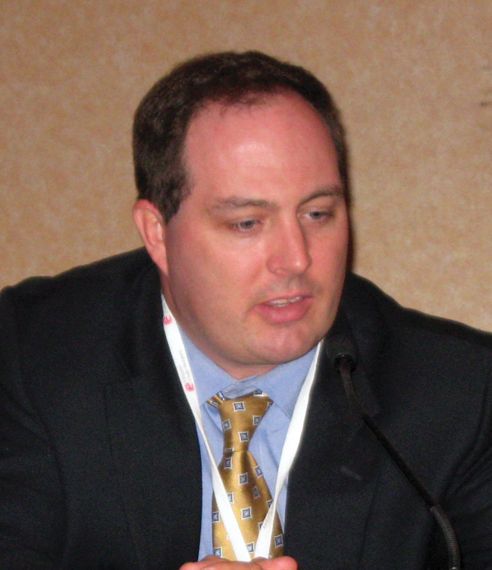
In regard to patients with lower levels of obesity, “we should be intervening in this chronic disease earlier rather than later,” said Stacy A. Brethauer, MD, professor of surgery at the Ohio State University, Columbus, in a presentation about new standards for bariatric surgery at the 2019 Annual Minimally Invasive Surgery Symposium by Global Academy for Medical Education.
Bariatric treatment “should be offered after nonsurgical [weight-loss] therapy has failed,” he said. “That’s not where you stop. You continue to escalate as you would for heart disease or cancer.”
As Dr. Brethauer noted, research suggests that all categories of obesity – including so-called class 1 obesity (defined as a BMI from 30.0 to 34.9 kg/m2) – boost the risk of multiple diseases, including hypertension, coronary artery disease, congestive heart failure, stroke, asthma, pulmonary embolism, gallbladder disease, several types of cancer, osteoarthritis, knee pain and chronic back pain.
“There is no question that class 1 obesity is clearly putting people at risk,” he said. “Ultimately, you can conclude from all this evidence that class 1 is a chronic disease, and it deserves to be treated effectively.”
There are, of course, various nonsurgical treatments for obesity, including diet and exercise and pharmacotherapy. However, systematic reviews have found that people find it extremely difficult to keep the weight off after 1 year regardless of the strategy they adopt.
Beyond a year, Dr. Brethauer said, “you get poor maintenance of weight control, and you get poor control of metabolic burden. You don’t have a durable efficacy.”
In the past, bariatric surgery wasn’t considered an option for patients with class 1 obesity. It’s traditionally been reserved for patients with BMIs at or above 35 kg/m2. But this standard has evolved in recent years.
In 2018, Dr. Brethauer coauthored an updated position statement by the American Society for Metabolic and Bariatric Surgery that encouraged bariatric surgery in certain mildly obese patients.
“For most people with class I obesity,” the statement on bariatric surgery states, “it is clear that the nonsurgical group of therapies will not provide a durable solution to their disease of obesity.”
The statement went on to say that “surgical intervention should be considered after failure of nonsurgical treatments” in the class 1 population.
Bariatric surgery in the class 1 population does more than reduce obesity, Dr. Brethauer said. “Over the last 5 years or so, a large body of literature has emerged,” he said, and both systematic reviews and randomized trails have shown significant postsurgery improvements in comorbidities such as diabetes.
“It’s important to emphasize that these patients don’t become underweight,” he said. “The body finds a healthy set point. They don’t become underweight or malnourished because you’re operating on a lower-weight group.”
Are weight-loss operations safe in class 1 patients? The American Society for Metabolic and Bariatric Surgery statement says that research has found “bariatric surgery is associated with modest morbidity and very low mortality in patients with class I obesity.”
In fact, Dr. Brethauer said, the mortality rate in this population is “less than gallbladder surgery, less than hip surgery, less than hysterectomy, less than knee surgery – operations people are being referred for and undergoing all the time.”
He added: “The case can be made very clearly based on this data that these operations are safe in this patient population. Not only are they safe, they have durable and significant impact on comorbidities.”
Global Academy for Medical Education and this news organization are owned by the same parent company. Dr. Brethauer discloses relationships with Medtronic (speaker) and GI Windows (consultant).
LAS VEGAS – Once reserved for the most obese patients, bariatric surgery is on the road to becoming an option for millions of Americans who are just a step beyond overweight, even those with a body mass index as low as 30 kg/m2.
In regard to patients with lower levels of obesity, “we should be intervening in this chronic disease earlier rather than later,” said Stacy A. Brethauer, MD, professor of surgery at the Ohio State University, Columbus, in a presentation about new standards for bariatric surgery at the 2019 Annual Minimally Invasive Surgery Symposium by Global Academy for Medical Education.
Bariatric treatment “should be offered after nonsurgical [weight-loss] therapy has failed,” he said. “That’s not where you stop. You continue to escalate as you would for heart disease or cancer.”
As Dr. Brethauer noted, research suggests that all categories of obesity – including so-called class 1 obesity (defined as a BMI from 30.0 to 34.9 kg/m2) – boost the risk of multiple diseases, including hypertension, coronary artery disease, congestive heart failure, stroke, asthma, pulmonary embolism, gallbladder disease, several types of cancer, osteoarthritis, knee pain and chronic back pain.
“There is no question that class 1 obesity is clearly putting people at risk,” he said. “Ultimately, you can conclude from all this evidence that class 1 is a chronic disease, and it deserves to be treated effectively.”
There are, of course, various nonsurgical treatments for obesity, including diet and exercise and pharmacotherapy. However, systematic reviews have found that people find it extremely difficult to keep the weight off after 1 year regardless of the strategy they adopt.
Beyond a year, Dr. Brethauer said, “you get poor maintenance of weight control, and you get poor control of metabolic burden. You don’t have a durable efficacy.”
In the past, bariatric surgery wasn’t considered an option for patients with class 1 obesity. It’s traditionally been reserved for patients with BMIs at or above 35 kg/m2. But this standard has evolved in recent years.
In 2018, Dr. Brethauer coauthored an updated position statement by the American Society for Metabolic and Bariatric Surgery that encouraged bariatric surgery in certain mildly obese patients.
“For most people with class I obesity,” the statement on bariatric surgery states, “it is clear that the nonsurgical group of therapies will not provide a durable solution to their disease of obesity.”
The statement went on to say that “surgical intervention should be considered after failure of nonsurgical treatments” in the class 1 population.
Bariatric surgery in the class 1 population does more than reduce obesity, Dr. Brethauer said. “Over the last 5 years or so, a large body of literature has emerged,” he said, and both systematic reviews and randomized trails have shown significant postsurgery improvements in comorbidities such as diabetes.
“It’s important to emphasize that these patients don’t become underweight,” he said. “The body finds a healthy set point. They don’t become underweight or malnourished because you’re operating on a lower-weight group.”
Are weight-loss operations safe in class 1 patients? The American Society for Metabolic and Bariatric Surgery statement says that research has found “bariatric surgery is associated with modest morbidity and very low mortality in patients with class I obesity.”
In fact, Dr. Brethauer said, the mortality rate in this population is “less than gallbladder surgery, less than hip surgery, less than hysterectomy, less than knee surgery – operations people are being referred for and undergoing all the time.”
He added: “The case can be made very clearly based on this data that these operations are safe in this patient population. Not only are they safe, they have durable and significant impact on comorbidities.”
Global Academy for Medical Education and this news organization are owned by the same parent company. Dr. Brethauer discloses relationships with Medtronic (speaker) and GI Windows (consultant).
LAS VEGAS – Once reserved for the most obese patients, bariatric surgery is on the road to becoming an option for millions of Americans who are just a step beyond overweight, even those with a body mass index as low as 30 kg/m2.
In regard to patients with lower levels of obesity, “we should be intervening in this chronic disease earlier rather than later,” said Stacy A. Brethauer, MD, professor of surgery at the Ohio State University, Columbus, in a presentation about new standards for bariatric surgery at the 2019 Annual Minimally Invasive Surgery Symposium by Global Academy for Medical Education.
Bariatric treatment “should be offered after nonsurgical [weight-loss] therapy has failed,” he said. “That’s not where you stop. You continue to escalate as you would for heart disease or cancer.”
As Dr. Brethauer noted, research suggests that all categories of obesity – including so-called class 1 obesity (defined as a BMI from 30.0 to 34.9 kg/m2) – boost the risk of multiple diseases, including hypertension, coronary artery disease, congestive heart failure, stroke, asthma, pulmonary embolism, gallbladder disease, several types of cancer, osteoarthritis, knee pain and chronic back pain.
“There is no question that class 1 obesity is clearly putting people at risk,” he said. “Ultimately, you can conclude from all this evidence that class 1 is a chronic disease, and it deserves to be treated effectively.”
There are, of course, various nonsurgical treatments for obesity, including diet and exercise and pharmacotherapy. However, systematic reviews have found that people find it extremely difficult to keep the weight off after 1 year regardless of the strategy they adopt.
Beyond a year, Dr. Brethauer said, “you get poor maintenance of weight control, and you get poor control of metabolic burden. You don’t have a durable efficacy.”
In the past, bariatric surgery wasn’t considered an option for patients with class 1 obesity. It’s traditionally been reserved for patients with BMIs at or above 35 kg/m2. But this standard has evolved in recent years.
In 2018, Dr. Brethauer coauthored an updated position statement by the American Society for Metabolic and Bariatric Surgery that encouraged bariatric surgery in certain mildly obese patients.
“For most people with class I obesity,” the statement on bariatric surgery states, “it is clear that the nonsurgical group of therapies will not provide a durable solution to their disease of obesity.”
The statement went on to say that “surgical intervention should be considered after failure of nonsurgical treatments” in the class 1 population.
Bariatric surgery in the class 1 population does more than reduce obesity, Dr. Brethauer said. “Over the last 5 years or so, a large body of literature has emerged,” he said, and both systematic reviews and randomized trails have shown significant postsurgery improvements in comorbidities such as diabetes.
“It’s important to emphasize that these patients don’t become underweight,” he said. “The body finds a healthy set point. They don’t become underweight or malnourished because you’re operating on a lower-weight group.”
Are weight-loss operations safe in class 1 patients? The American Society for Metabolic and Bariatric Surgery statement says that research has found “bariatric surgery is associated with modest morbidity and very low mortality in patients with class I obesity.”
In fact, Dr. Brethauer said, the mortality rate in this population is “less than gallbladder surgery, less than hip surgery, less than hysterectomy, less than knee surgery – operations people are being referred for and undergoing all the time.”
He added: “The case can be made very clearly based on this data that these operations are safe in this patient population. Not only are they safe, they have durable and significant impact on comorbidities.”
Global Academy for Medical Education and this news organization are owned by the same parent company. Dr. Brethauer discloses relationships with Medtronic (speaker) and GI Windows (consultant).
REPORTING FROM MISS
Robotic surgery offers minimally invasive approach to complex patients
LAS VEGAS – Colorectal surgeon Jamie Cannon, MD, doesn’t think there’s a rivalry between laparoscopic surgery and robotic surgery. Instead, she told colleagues, they should be seen as parts of the same whole: “Robotics is laparoscopy. It’s just a tool that allows us to do laparoscopic surgery better.”
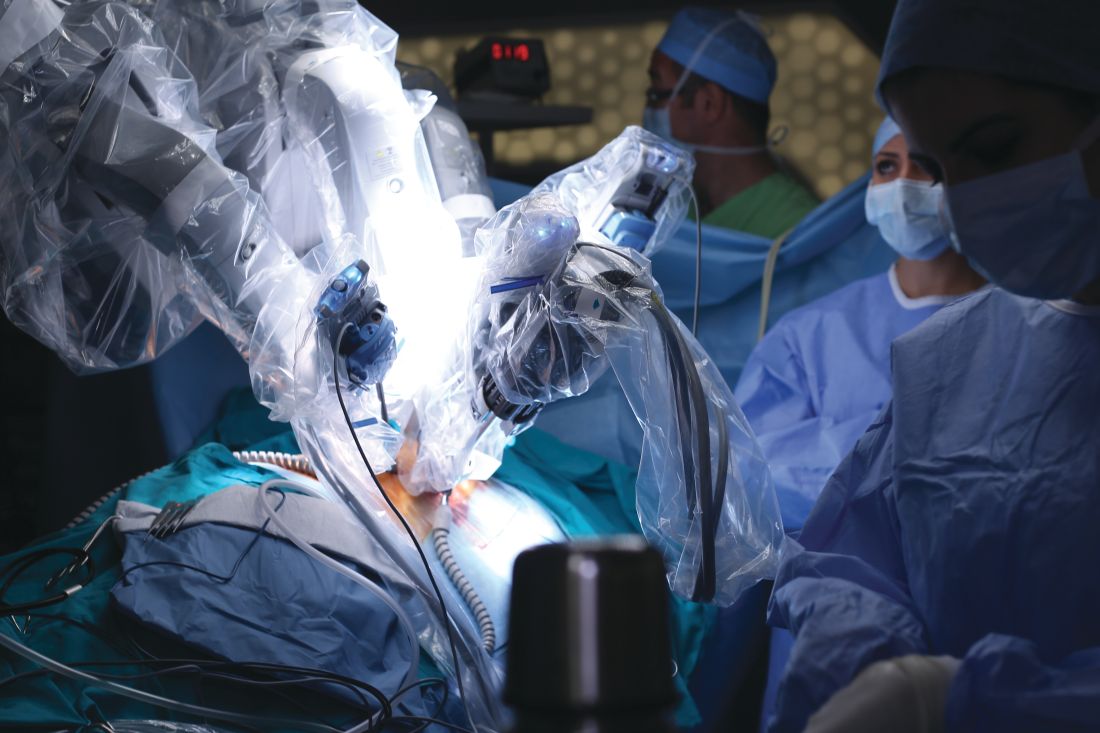
Specifically, robotic surgery deserves a prominent place in treatment for rectal cancer, Dr. Cannon, associate professor of surgery at the University of Alabama at Birmingham, said in a presentation at the Annual Minimally Invasive Surgery Symposium by Global Academy for Medical Education.
“We can reduce the conversion rate and offer more complex patients a minimally invasive operation,” she said.
Dr. Cannon listed these benefits of robotic surgery:
• Better cameras offer 3-D visualization.
• A stable operating platform provides tremor control.
• Instruments are fully articulated.
• The ability to perform fine dissection and complex suturing in confined spaces is enhanced.
• Ergonomics are improved.
“From a surgeon’s standpoint, it’s a lot more fun and a lot more comfortable,” she said. “You’re sitting there rather than straining your neck and arms to accomplish something difficult.”
Statistics show that robotics is gaining on open surgery in anterior rectal resection procedures while laparoscopy remains flat, she noted. In 2008, she said, the percentages for open, laparoscopic and robotic procedures were 81%, 18% and 1%, respectively. In 2015, they were 60%, 20% and 19%, respectively.
According to Dr. Cannon, other benefits of robotic surgery in rectal resections include better outcomes in difficult patients and lower conversion rates.
A 2017 prospective, randomized study did not show a difference between laparoscopic and robotic approaches to conversion rates in rectal resection, she noted (JAMA. 2017;318[16]:1569-80).
However, she said, a newer study presented at the Academic Surgical Congress in 2018 did show a major difference, with a conversion rate of 17% in laparoscopic procedures (n = 128) and 1% in robotic procedures (n = 92, P less than .05). Conversion rates in obese patients were similar.
In regard to obese patients, “we know they don’t do well,” Dr. Cannon said. “One thing we don’t always talk about is the impact on surgeons. These cases are very difficult to do.” Robotic technology allows surgeons to “make up for the challenges you experience laparoscopically” in these procedures, she said.
Robotics can be helpful because they allow surgeons to offer minimally invasive surgery to patients who pose challenges because of morbid obesity, inflammatory conditions such as Crohn’s disease and enteric fistulas, and histories of multiple previous surgeries, she added.
Global Academy for Medical Education and this news organization are owned by the same parent company. Dr. Cannon disclosed serving as an instructor for Intuitive Surgical.
LAS VEGAS – Colorectal surgeon Jamie Cannon, MD, doesn’t think there’s a rivalry between laparoscopic surgery and robotic surgery. Instead, she told colleagues, they should be seen as parts of the same whole: “Robotics is laparoscopy. It’s just a tool that allows us to do laparoscopic surgery better.”
Specifically, robotic surgery deserves a prominent place in treatment for rectal cancer, Dr. Cannon, associate professor of surgery at the University of Alabama at Birmingham, said in a presentation at the Annual Minimally Invasive Surgery Symposium by Global Academy for Medical Education.
“We can reduce the conversion rate and offer more complex patients a minimally invasive operation,” she said.
Dr. Cannon listed these benefits of robotic surgery:
• Better cameras offer 3-D visualization.
• A stable operating platform provides tremor control.
• Instruments are fully articulated.
• The ability to perform fine dissection and complex suturing in confined spaces is enhanced.
• Ergonomics are improved.
“From a surgeon’s standpoint, it’s a lot more fun and a lot more comfortable,” she said. “You’re sitting there rather than straining your neck and arms to accomplish something difficult.”
Statistics show that robotics is gaining on open surgery in anterior rectal resection procedures while laparoscopy remains flat, she noted. In 2008, she said, the percentages for open, laparoscopic and robotic procedures were 81%, 18% and 1%, respectively. In 2015, they were 60%, 20% and 19%, respectively.
According to Dr. Cannon, other benefits of robotic surgery in rectal resections include better outcomes in difficult patients and lower conversion rates.
A 2017 prospective, randomized study did not show a difference between laparoscopic and robotic approaches to conversion rates in rectal resection, she noted (JAMA. 2017;318[16]:1569-80).
However, she said, a newer study presented at the Academic Surgical Congress in 2018 did show a major difference, with a conversion rate of 17% in laparoscopic procedures (n = 128) and 1% in robotic procedures (n = 92, P less than .05). Conversion rates in obese patients were similar.
In regard to obese patients, “we know they don’t do well,” Dr. Cannon said. “One thing we don’t always talk about is the impact on surgeons. These cases are very difficult to do.” Robotic technology allows surgeons to “make up for the challenges you experience laparoscopically” in these procedures, she said.
Robotics can be helpful because they allow surgeons to offer minimally invasive surgery to patients who pose challenges because of morbid obesity, inflammatory conditions such as Crohn’s disease and enteric fistulas, and histories of multiple previous surgeries, she added.
Global Academy for Medical Education and this news organization are owned by the same parent company. Dr. Cannon disclosed serving as an instructor for Intuitive Surgical.
LAS VEGAS – Colorectal surgeon Jamie Cannon, MD, doesn’t think there’s a rivalry between laparoscopic surgery and robotic surgery. Instead, she told colleagues, they should be seen as parts of the same whole: “Robotics is laparoscopy. It’s just a tool that allows us to do laparoscopic surgery better.”
Specifically, robotic surgery deserves a prominent place in treatment for rectal cancer, Dr. Cannon, associate professor of surgery at the University of Alabama at Birmingham, said in a presentation at the Annual Minimally Invasive Surgery Symposium by Global Academy for Medical Education.
“We can reduce the conversion rate and offer more complex patients a minimally invasive operation,” she said.
Dr. Cannon listed these benefits of robotic surgery:
• Better cameras offer 3-D visualization.
• A stable operating platform provides tremor control.
• Instruments are fully articulated.
• The ability to perform fine dissection and complex suturing in confined spaces is enhanced.
• Ergonomics are improved.
“From a surgeon’s standpoint, it’s a lot more fun and a lot more comfortable,” she said. “You’re sitting there rather than straining your neck and arms to accomplish something difficult.”
Statistics show that robotics is gaining on open surgery in anterior rectal resection procedures while laparoscopy remains flat, she noted. In 2008, she said, the percentages for open, laparoscopic and robotic procedures were 81%, 18% and 1%, respectively. In 2015, they were 60%, 20% and 19%, respectively.
According to Dr. Cannon, other benefits of robotic surgery in rectal resections include better outcomes in difficult patients and lower conversion rates.
A 2017 prospective, randomized study did not show a difference between laparoscopic and robotic approaches to conversion rates in rectal resection, she noted (JAMA. 2017;318[16]:1569-80).
However, she said, a newer study presented at the Academic Surgical Congress in 2018 did show a major difference, with a conversion rate of 17% in laparoscopic procedures (n = 128) and 1% in robotic procedures (n = 92, P less than .05). Conversion rates in obese patients were similar.
In regard to obese patients, “we know they don’t do well,” Dr. Cannon said. “One thing we don’t always talk about is the impact on surgeons. These cases are very difficult to do.” Robotic technology allows surgeons to “make up for the challenges you experience laparoscopically” in these procedures, she said.
Robotics can be helpful because they allow surgeons to offer minimally invasive surgery to patients who pose challenges because of morbid obesity, inflammatory conditions such as Crohn’s disease and enteric fistulas, and histories of multiple previous surgeries, she added.
Global Academy for Medical Education and this news organization are owned by the same parent company. Dr. Cannon disclosed serving as an instructor for Intuitive Surgical.
REPORTING FROM MISS
Time to revisit fasting rules for surgery patients
LAS VEGAS – Anesthesiologist Michael W. Manning, MD, has a few unusual rules about preparing patients for surgery: Give them a carb-heavy beverage. Definitely provide caffeine to coffee addicts who haven’t had a cup for quite a while. And tell them – again and again – what to expect in terms of pain.

All of these strategies can boost recovery, Dr. Manning, assistant professor of anesthesiology at Duke University Medical Center, Durham, N.C., said in a pair of presentations at the Annual Minimally Invasive Surgery Symposium by Global Academy for Medical Education.
Dr. Manning’s tips
Don’t starve patients before procedures: “We should prep for a surgery like a marathon,” Dr. Manning recommended. That means allowing patients to eat and drink instead of starving them via fasting out of fear that they’ll aspirate under anesthesia, he said.
He pointed to 2017 guidelines issued by the American Society of Anesthesiologists, indicating that patients may drink clear liquids for up to 2 hours before procedures that require general or regional anesthesia or procedural sedation and anesthesia. And patients may consume a light meal, such as toast and a clear liquid, or nonhuman milk, until 6 hours before a procedure. However, they should fast 8 hours after eating fried or fatty foods or meat (Anesthesiology 2017:376-93).
Extensive research supports carb-loading via liquid prior to surgery, said Dr. Manning, who cited a 2014 Cochrane Library review that examined 27 trials on preoperative consumption of carbs prior to various types of surgery. The review found no increase in complications in patients who consumed carbs, compared with placebo or fasting, and there was a slight decrease in length of stay (Cochrane Database Syst Rev. 2014 Aug 14;[8]).
In terms of benefits, research suggests that carb-loading improves patient comfort and gastric emptying, Dr. Manning said, and patients welcome it.
Educate patients about pain expectations
“We surgeons and anesthesiologists need to partner together and talk to patients and define what the pain expectations are,” Dr. Manning said.
At Duke, physicians worked together to set up a script that patients will hear four different times by medical personnel such as the surgeon, the anesthesiologist, and nursing staff, he said.
The script aims to educate patients about what to expect in terms of pain. For example, he says, before some surgeries, patients might be told: “You’re going to have shoulder pain that’s going to feel like you’ve been in the garage all day putting boxes on the shelf all the time,” or “Your belly is going to feel like you did 1,000 sit-ups.”
This eliminates the “fear and anxiety” that comes with not knowing what to expect regarding pain, he said.
Ask about coffee. Yes, coffee.
According to Dr. Manning, patients who regularly drink “a robust amount” of coffee may experience more postoperative pain following afternoon surgery because they’ve gone for an unusually long time without caffeine. Take a “coffee history,” he advised, and ask how much coffee the patient would have consumed by this time on a normal day. Then give patients caffeine as needed. (Coffee is considered a clear beverage under the American Society of Anesthesiologists guidelines.)
“It takes the edge off and helps reduce postoperative pain,” he said.
Global Academy for Medical Education and this news organization are owned by the same parent company. Dr. Manning has no disclosures.
LAS VEGAS – Anesthesiologist Michael W. Manning, MD, has a few unusual rules about preparing patients for surgery: Give them a carb-heavy beverage. Definitely provide caffeine to coffee addicts who haven’t had a cup for quite a while. And tell them – again and again – what to expect in terms of pain.
All of these strategies can boost recovery, Dr. Manning, assistant professor of anesthesiology at Duke University Medical Center, Durham, N.C., said in a pair of presentations at the Annual Minimally Invasive Surgery Symposium by Global Academy for Medical Education.
Dr. Manning’s tips
Don’t starve patients before procedures: “We should prep for a surgery like a marathon,” Dr. Manning recommended. That means allowing patients to eat and drink instead of starving them via fasting out of fear that they’ll aspirate under anesthesia, he said.
He pointed to 2017 guidelines issued by the American Society of Anesthesiologists, indicating that patients may drink clear liquids for up to 2 hours before procedures that require general or regional anesthesia or procedural sedation and anesthesia. And patients may consume a light meal, such as toast and a clear liquid, or nonhuman milk, until 6 hours before a procedure. However, they should fast 8 hours after eating fried or fatty foods or meat (Anesthesiology 2017:376-93).
Extensive research supports carb-loading via liquid prior to surgery, said Dr. Manning, who cited a 2014 Cochrane Library review that examined 27 trials on preoperative consumption of carbs prior to various types of surgery. The review found no increase in complications in patients who consumed carbs, compared with placebo or fasting, and there was a slight decrease in length of stay (Cochrane Database Syst Rev. 2014 Aug 14;[8]).
In terms of benefits, research suggests that carb-loading improves patient comfort and gastric emptying, Dr. Manning said, and patients welcome it.
Educate patients about pain expectations
“We surgeons and anesthesiologists need to partner together and talk to patients and define what the pain expectations are,” Dr. Manning said.
At Duke, physicians worked together to set up a script that patients will hear four different times by medical personnel such as the surgeon, the anesthesiologist, and nursing staff, he said.
The script aims to educate patients about what to expect in terms of pain. For example, he says, before some surgeries, patients might be told: “You’re going to have shoulder pain that’s going to feel like you’ve been in the garage all day putting boxes on the shelf all the time,” or “Your belly is going to feel like you did 1,000 sit-ups.”
This eliminates the “fear and anxiety” that comes with not knowing what to expect regarding pain, he said.
Ask about coffee. Yes, coffee.
According to Dr. Manning, patients who regularly drink “a robust amount” of coffee may experience more postoperative pain following afternoon surgery because they’ve gone for an unusually long time without caffeine. Take a “coffee history,” he advised, and ask how much coffee the patient would have consumed by this time on a normal day. Then give patients caffeine as needed. (Coffee is considered a clear beverage under the American Society of Anesthesiologists guidelines.)
“It takes the edge off and helps reduce postoperative pain,” he said.
Global Academy for Medical Education and this news organization are owned by the same parent company. Dr. Manning has no disclosures.
LAS VEGAS – Anesthesiologist Michael W. Manning, MD, has a few unusual rules about preparing patients for surgery: Give them a carb-heavy beverage. Definitely provide caffeine to coffee addicts who haven’t had a cup for quite a while. And tell them – again and again – what to expect in terms of pain.
All of these strategies can boost recovery, Dr. Manning, assistant professor of anesthesiology at Duke University Medical Center, Durham, N.C., said in a pair of presentations at the Annual Minimally Invasive Surgery Symposium by Global Academy for Medical Education.
Dr. Manning’s tips
Don’t starve patients before procedures: “We should prep for a surgery like a marathon,” Dr. Manning recommended. That means allowing patients to eat and drink instead of starving them via fasting out of fear that they’ll aspirate under anesthesia, he said.
He pointed to 2017 guidelines issued by the American Society of Anesthesiologists, indicating that patients may drink clear liquids for up to 2 hours before procedures that require general or regional anesthesia or procedural sedation and anesthesia. And patients may consume a light meal, such as toast and a clear liquid, or nonhuman milk, until 6 hours before a procedure. However, they should fast 8 hours after eating fried or fatty foods or meat (Anesthesiology 2017:376-93).
Extensive research supports carb-loading via liquid prior to surgery, said Dr. Manning, who cited a 2014 Cochrane Library review that examined 27 trials on preoperative consumption of carbs prior to various types of surgery. The review found no increase in complications in patients who consumed carbs, compared with placebo or fasting, and there was a slight decrease in length of stay (Cochrane Database Syst Rev. 2014 Aug 14;[8]).
In terms of benefits, research suggests that carb-loading improves patient comfort and gastric emptying, Dr. Manning said, and patients welcome it.
Educate patients about pain expectations
“We surgeons and anesthesiologists need to partner together and talk to patients and define what the pain expectations are,” Dr. Manning said.
At Duke, physicians worked together to set up a script that patients will hear four different times by medical personnel such as the surgeon, the anesthesiologist, and nursing staff, he said.
The script aims to educate patients about what to expect in terms of pain. For example, he says, before some surgeries, patients might be told: “You’re going to have shoulder pain that’s going to feel like you’ve been in the garage all day putting boxes on the shelf all the time,” or “Your belly is going to feel like you did 1,000 sit-ups.”
This eliminates the “fear and anxiety” that comes with not knowing what to expect regarding pain, he said.
Ask about coffee. Yes, coffee.
According to Dr. Manning, patients who regularly drink “a robust amount” of coffee may experience more postoperative pain following afternoon surgery because they’ve gone for an unusually long time without caffeine. Take a “coffee history,” he advised, and ask how much coffee the patient would have consumed by this time on a normal day. Then give patients caffeine as needed. (Coffee is considered a clear beverage under the American Society of Anesthesiologists guidelines.)
“It takes the edge off and helps reduce postoperative pain,” he said.
Global Academy for Medical Education and this news organization are owned by the same parent company. Dr. Manning has no disclosures.
REPORTING FROM MISS
Anti-mesh trend may be felt by surgeons doing hernia repairs
LAS VEGAS – Hernia surgeons are square in the path of a growing backlash against the use of mesh in surgery, a fellow surgeon says, and he’s warning colleagues to take heed of the trend.
“I tell you, it’s coming,” B. Todd Heniford, MD,, professor and chief of gastrointestinal and minimally invasive surgery at Carolinas Medical Center, Charlotte, N.C., declared in a presentation at the Annual Minimally Invasive Surgery Symposium by Global Academy for Medical Education.
“This is no time to abandon surgical mesh in hernia procedures,” he argued. Instead, he said surgeons should engage in better communication with patients. Otherwise, “we are not helping ourselves as surgeons.”
In the United States, most of the controversy around the use of mesh in surgery has revolved around transvaginal procedures in women. As a 2017 historical review explained, “mesh used to augment transvaginal repair of [pelvic organ prolapse] was introduced in the United States in 2005 without clinical safety and efficacy data. In the subsequent years of use, both major and minor complications were increasingly reported, leading to several [Food and Drug Administration] notifications and warnings” (Int Urogynecol J. 2017 Apr;28[4]:527-35).
An FDA safety alert in 2011 and new requirements for postmarked surveillance orders convinced most manufacturers to stop marketing surgical mesh for transvaginal repair of pelvic organ prolapse. According to a 2018 report, an estimated 73,000 patients in the United States have filed product liability claims regarding complications from mesh used in transvaginal procedures (Female Pelvic Med Reconstr Surg. 2018 Jan/Feb;24[1]:21-25).
Outside the United States, Dr. Heniford said, concerns about surgical mesh have spawned a global outcry about its use in another kind of procedure – hernia surgery. “It is gaining speed in Europe, Australia and New Zealand,” he said.
Indeed, these are some recent headlines in Australian and British news outlets: “Concern grows over hernia mesh as more patients share post-surgery horror stories,” “Hernia mesh concerns grow among men as more patients report surgery complications,” “Pelvic and hernia mesh patients will confront politicians and bureaucrats in April over the medical device industry,” and “Mesh implants: Man speaks of procedure’s devastating impact.”
“When people read this, it influences them,” Dr. Heniford said. “And mesh companies are not helping us, let’s be frank about it,” he added, noting that manufacturers have launched recalls due to problems and complications.
Is the anti-mesh frenzy regarding hernias coming to the United States? “Absolutely,” said Dr. Heniford, noting that an online search will turn up many legal websites devoted to hernia mesh lawsuits. And, he said, hernia patients are already concerned because of commercials they’ve seen on TV. “One of the issues is that the lawyers in the United States have become real experts on mesh for pelvic slings,” he said. “They’ve just about run through that.” It’s not just lawyers who are taking advantage of the anti-mesh trend. “If you go online and you type in ‘no-mesh surgery,’ ” he said, “you’ll see loads of surgeons who are trying to take advantage of this.”
In reality, research supports the use of mesh in hernia procedures. A 2018 Cochrane Library review found that “overall, hernia repairs with and without mesh both proved effective in the treatment of hernias, although mesh repairs demonstrated fewer hernia recurrences, a shorter operation time and faster return to normal activities. Non-mesh repairs are still widely used, often due to the cost and poor availability of the mesh product itself” (Cochrane Database Syst Rev. 2018, Issue 9.)
Dr. Heniford suggested that surgeons can do much more to calm patients about the use of mesh. One strategy, he said, is to help them understand that they may face pain after their procedures that has nothing to do with surgical mesh.
“We do not counsel our patients enough about postoperative pain,” he said. “If you see someone who had real pain prior to the operation, you really have to counsel them about postoperation pain. Patients who present with pain are much more likely to have pain after surgery.”
He noted that surgical mesh isn’t appropriate for all patients.
Dr. Heniford left colleagues with this message: “If we use mesh, there’s no question we improve our outcomes long term. But we’ve got to be careful about how we place it and the patients we choose.”
Global Academy for Medical Education and this news organization are owned by the same parent company. Dr. Heniford disclosed relationships with Allergan, Stryker, and W.L. Gore.
LAS VEGAS – Hernia surgeons are square in the path of a growing backlash against the use of mesh in surgery, a fellow surgeon says, and he’s warning colleagues to take heed of the trend.
“I tell you, it’s coming,” B. Todd Heniford, MD,, professor and chief of gastrointestinal and minimally invasive surgery at Carolinas Medical Center, Charlotte, N.C., declared in a presentation at the Annual Minimally Invasive Surgery Symposium by Global Academy for Medical Education.
“This is no time to abandon surgical mesh in hernia procedures,” he argued. Instead, he said surgeons should engage in better communication with patients. Otherwise, “we are not helping ourselves as surgeons.”
In the United States, most of the controversy around the use of mesh in surgery has revolved around transvaginal procedures in women. As a 2017 historical review explained, “mesh used to augment transvaginal repair of [pelvic organ prolapse] was introduced in the United States in 2005 without clinical safety and efficacy data. In the subsequent years of use, both major and minor complications were increasingly reported, leading to several [Food and Drug Administration] notifications and warnings” (Int Urogynecol J. 2017 Apr;28[4]:527-35).
An FDA safety alert in 2011 and new requirements for postmarked surveillance orders convinced most manufacturers to stop marketing surgical mesh for transvaginal repair of pelvic organ prolapse. According to a 2018 report, an estimated 73,000 patients in the United States have filed product liability claims regarding complications from mesh used in transvaginal procedures (Female Pelvic Med Reconstr Surg. 2018 Jan/Feb;24[1]:21-25).
Outside the United States, Dr. Heniford said, concerns about surgical mesh have spawned a global outcry about its use in another kind of procedure – hernia surgery. “It is gaining speed in Europe, Australia and New Zealand,” he said.
Indeed, these are some recent headlines in Australian and British news outlets: “Concern grows over hernia mesh as more patients share post-surgery horror stories,” “Hernia mesh concerns grow among men as more patients report surgery complications,” “Pelvic and hernia mesh patients will confront politicians and bureaucrats in April over the medical device industry,” and “Mesh implants: Man speaks of procedure’s devastating impact.”
“When people read this, it influences them,” Dr. Heniford said. “And mesh companies are not helping us, let’s be frank about it,” he added, noting that manufacturers have launched recalls due to problems and complications.
Is the anti-mesh frenzy regarding hernias coming to the United States? “Absolutely,” said Dr. Heniford, noting that an online search will turn up many legal websites devoted to hernia mesh lawsuits. And, he said, hernia patients are already concerned because of commercials they’ve seen on TV. “One of the issues is that the lawyers in the United States have become real experts on mesh for pelvic slings,” he said. “They’ve just about run through that.” It’s not just lawyers who are taking advantage of the anti-mesh trend. “If you go online and you type in ‘no-mesh surgery,’ ” he said, “you’ll see loads of surgeons who are trying to take advantage of this.”
In reality, research supports the use of mesh in hernia procedures. A 2018 Cochrane Library review found that “overall, hernia repairs with and without mesh both proved effective in the treatment of hernias, although mesh repairs demonstrated fewer hernia recurrences, a shorter operation time and faster return to normal activities. Non-mesh repairs are still widely used, often due to the cost and poor availability of the mesh product itself” (Cochrane Database Syst Rev. 2018, Issue 9.)
Dr. Heniford suggested that surgeons can do much more to calm patients about the use of mesh. One strategy, he said, is to help them understand that they may face pain after their procedures that has nothing to do with surgical mesh.
“We do not counsel our patients enough about postoperative pain,” he said. “If you see someone who had real pain prior to the operation, you really have to counsel them about postoperation pain. Patients who present with pain are much more likely to have pain after surgery.”
He noted that surgical mesh isn’t appropriate for all patients.
Dr. Heniford left colleagues with this message: “If we use mesh, there’s no question we improve our outcomes long term. But we’ve got to be careful about how we place it and the patients we choose.”
Global Academy for Medical Education and this news organization are owned by the same parent company. Dr. Heniford disclosed relationships with Allergan, Stryker, and W.L. Gore.
LAS VEGAS – Hernia surgeons are square in the path of a growing backlash against the use of mesh in surgery, a fellow surgeon says, and he’s warning colleagues to take heed of the trend.
“I tell you, it’s coming,” B. Todd Heniford, MD,, professor and chief of gastrointestinal and minimally invasive surgery at Carolinas Medical Center, Charlotte, N.C., declared in a presentation at the Annual Minimally Invasive Surgery Symposium by Global Academy for Medical Education.
“This is no time to abandon surgical mesh in hernia procedures,” he argued. Instead, he said surgeons should engage in better communication with patients. Otherwise, “we are not helping ourselves as surgeons.”
In the United States, most of the controversy around the use of mesh in surgery has revolved around transvaginal procedures in women. As a 2017 historical review explained, “mesh used to augment transvaginal repair of [pelvic organ prolapse] was introduced in the United States in 2005 without clinical safety and efficacy data. In the subsequent years of use, both major and minor complications were increasingly reported, leading to several [Food and Drug Administration] notifications and warnings” (Int Urogynecol J. 2017 Apr;28[4]:527-35).
An FDA safety alert in 2011 and new requirements for postmarked surveillance orders convinced most manufacturers to stop marketing surgical mesh for transvaginal repair of pelvic organ prolapse. According to a 2018 report, an estimated 73,000 patients in the United States have filed product liability claims regarding complications from mesh used in transvaginal procedures (Female Pelvic Med Reconstr Surg. 2018 Jan/Feb;24[1]:21-25).
Outside the United States, Dr. Heniford said, concerns about surgical mesh have spawned a global outcry about its use in another kind of procedure – hernia surgery. “It is gaining speed in Europe, Australia and New Zealand,” he said.
Indeed, these are some recent headlines in Australian and British news outlets: “Concern grows over hernia mesh as more patients share post-surgery horror stories,” “Hernia mesh concerns grow among men as more patients report surgery complications,” “Pelvic and hernia mesh patients will confront politicians and bureaucrats in April over the medical device industry,” and “Mesh implants: Man speaks of procedure’s devastating impact.”
“When people read this, it influences them,” Dr. Heniford said. “And mesh companies are not helping us, let’s be frank about it,” he added, noting that manufacturers have launched recalls due to problems and complications.
Is the anti-mesh frenzy regarding hernias coming to the United States? “Absolutely,” said Dr. Heniford, noting that an online search will turn up many legal websites devoted to hernia mesh lawsuits. And, he said, hernia patients are already concerned because of commercials they’ve seen on TV. “One of the issues is that the lawyers in the United States have become real experts on mesh for pelvic slings,” he said. “They’ve just about run through that.” It’s not just lawyers who are taking advantage of the anti-mesh trend. “If you go online and you type in ‘no-mesh surgery,’ ” he said, “you’ll see loads of surgeons who are trying to take advantage of this.”
In reality, research supports the use of mesh in hernia procedures. A 2018 Cochrane Library review found that “overall, hernia repairs with and without mesh both proved effective in the treatment of hernias, although mesh repairs demonstrated fewer hernia recurrences, a shorter operation time and faster return to normal activities. Non-mesh repairs are still widely used, often due to the cost and poor availability of the mesh product itself” (Cochrane Database Syst Rev. 2018, Issue 9.)
Dr. Heniford suggested that surgeons can do much more to calm patients about the use of mesh. One strategy, he said, is to help them understand that they may face pain after their procedures that has nothing to do with surgical mesh.
“We do not counsel our patients enough about postoperative pain,” he said. “If you see someone who had real pain prior to the operation, you really have to counsel them about postoperation pain. Patients who present with pain are much more likely to have pain after surgery.”
He noted that surgical mesh isn’t appropriate for all patients.
Dr. Heniford left colleagues with this message: “If we use mesh, there’s no question we improve our outcomes long term. But we’ve got to be careful about how we place it and the patients we choose.”
Global Academy for Medical Education and this news organization are owned by the same parent company. Dr. Heniford disclosed relationships with Allergan, Stryker, and W.L. Gore.
REPORTING FROM MISS
Experts offer insight on embracing diversity in the profession
Physicians have had diverse patients as long as there have been physicians (and patients). But diversity among health professionals remains elusive.

Can we do better? Absolutely, says a team of experts who will offer perspective to colleagues in a Wednesday morning session titled, “Best Practices and Tips for Developing Diversity in a Hospitalist Group.”
“The goals of our session are to review best practices for recruiting and retaining a diverse health care workforce, discuss strategies for dealing with implicit and explicit bias, and identify ways in which we can achieve common goals when working across cultures,” said hospitalist Amira del Pino-Jones, MD, assistant professor of medicine at the University of Colorado at Denver, Aurora, and director of the CU Hospitalist Scholars Program.
“Those who are interested in achieving excellence in hospital medicine through prioritizing diversity and equity efforts within their divisions, departments, and groups should attend,” said Dr. del Pino-Jones, who will be one of the speakers at the session.
Why is diversity important in hospital medicine? “Studies have shown that diversity enhances learning and work environments, promotes innovation, broadens research agendas, and improves the quality of care we provide for patients,” Dr. del Pino-Jones said. “In short, it is central to achieving excellence in hospital medicine.”
The session will focus on diverse groups, which have been historically underrepresented or discriminated against in medicine, including racial and ethnic minorities, women, LGBTQ+ individuals, and those with disabilities.
All speakers at the session are physicians, and each has seen or experienced challenges in diversifying their groups and divisions. “We hope to share our experiences, what we have learned, and ways to approach each of these issues. We also are hoping to hear from others and come up with new ways to approach these issues as a collective,” Dr. del Pino-Jones said.
Women and members of minority groups often have small numbers in their hospital medicine workplaces, especially in higher-level positions, and have trouble developing the critical mass to make progress on the diversity front, she said. Even when leaders recognize the importance of a diverse workforce, she said, “there is often a disconnect between motivation for increasing diversity and the ability to develop tangible, evidence-based methods that can be used to increase diversity.”
The session will tackle more than diversity at the workplace. Speakers also will discuss the relationship between medical professionals and patients.
“We will focus on the importance of inclusion and belonging, both of which are essential for creating a positive climate for all individuals,” Dr. del Pino-Jones said. “We will also discuss ways in which to cultivate cultural intelligence and enhance cross-cultural interactions between patients and providers. And we’ll look at ways to reduce and/or mitigate implicit and explicit bias in medicine.”
Dr. del Pino-Jones has no relevant disclosures.
Best Practices and Tips
for Developing Diversity in a Hospitalist Group
Wednesday, 10 - 11:30 a.m.
Potomac 4-6
Physicians have had diverse patients as long as there have been physicians (and patients). But diversity among health professionals remains elusive.
Can we do better? Absolutely, says a team of experts who will offer perspective to colleagues in a Wednesday morning session titled, “Best Practices and Tips for Developing Diversity in a Hospitalist Group.”
“The goals of our session are to review best practices for recruiting and retaining a diverse health care workforce, discuss strategies for dealing with implicit and explicit bias, and identify ways in which we can achieve common goals when working across cultures,” said hospitalist Amira del Pino-Jones, MD, assistant professor of medicine at the University of Colorado at Denver, Aurora, and director of the CU Hospitalist Scholars Program.
“Those who are interested in achieving excellence in hospital medicine through prioritizing diversity and equity efforts within their divisions, departments, and groups should attend,” said Dr. del Pino-Jones, who will be one of the speakers at the session.
Why is diversity important in hospital medicine? “Studies have shown that diversity enhances learning and work environments, promotes innovation, broadens research agendas, and improves the quality of care we provide for patients,” Dr. del Pino-Jones said. “In short, it is central to achieving excellence in hospital medicine.”
The session will focus on diverse groups, which have been historically underrepresented or discriminated against in medicine, including racial and ethnic minorities, women, LGBTQ+ individuals, and those with disabilities.
All speakers at the session are physicians, and each has seen or experienced challenges in diversifying their groups and divisions. “We hope to share our experiences, what we have learned, and ways to approach each of these issues. We also are hoping to hear from others and come up with new ways to approach these issues as a collective,” Dr. del Pino-Jones said.
Women and members of minority groups often have small numbers in their hospital medicine workplaces, especially in higher-level positions, and have trouble developing the critical mass to make progress on the diversity front, she said. Even when leaders recognize the importance of a diverse workforce, she said, “there is often a disconnect between motivation for increasing diversity and the ability to develop tangible, evidence-based methods that can be used to increase diversity.”
The session will tackle more than diversity at the workplace. Speakers also will discuss the relationship between medical professionals and patients.
“We will focus on the importance of inclusion and belonging, both of which are essential for creating a positive climate for all individuals,” Dr. del Pino-Jones said. “We will also discuss ways in which to cultivate cultural intelligence and enhance cross-cultural interactions between patients and providers. And we’ll look at ways to reduce and/or mitigate implicit and explicit bias in medicine.”
Dr. del Pino-Jones has no relevant disclosures.
Best Practices and Tips
for Developing Diversity in a Hospitalist Group
Wednesday, 10 - 11:30 a.m.
Potomac 4-6
Physicians have had diverse patients as long as there have been physicians (and patients). But diversity among health professionals remains elusive.
Can we do better? Absolutely, says a team of experts who will offer perspective to colleagues in a Wednesday morning session titled, “Best Practices and Tips for Developing Diversity in a Hospitalist Group.”
“The goals of our session are to review best practices for recruiting and retaining a diverse health care workforce, discuss strategies for dealing with implicit and explicit bias, and identify ways in which we can achieve common goals when working across cultures,” said hospitalist Amira del Pino-Jones, MD, assistant professor of medicine at the University of Colorado at Denver, Aurora, and director of the CU Hospitalist Scholars Program.
“Those who are interested in achieving excellence in hospital medicine through prioritizing diversity and equity efforts within their divisions, departments, and groups should attend,” said Dr. del Pino-Jones, who will be one of the speakers at the session.
Why is diversity important in hospital medicine? “Studies have shown that diversity enhances learning and work environments, promotes innovation, broadens research agendas, and improves the quality of care we provide for patients,” Dr. del Pino-Jones said. “In short, it is central to achieving excellence in hospital medicine.”
The session will focus on diverse groups, which have been historically underrepresented or discriminated against in medicine, including racial and ethnic minorities, women, LGBTQ+ individuals, and those with disabilities.
All speakers at the session are physicians, and each has seen or experienced challenges in diversifying their groups and divisions. “We hope to share our experiences, what we have learned, and ways to approach each of these issues. We also are hoping to hear from others and come up with new ways to approach these issues as a collective,” Dr. del Pino-Jones said.
Women and members of minority groups often have small numbers in their hospital medicine workplaces, especially in higher-level positions, and have trouble developing the critical mass to make progress on the diversity front, she said. Even when leaders recognize the importance of a diverse workforce, she said, “there is often a disconnect between motivation for increasing diversity and the ability to develop tangible, evidence-based methods that can be used to increase diversity.”
The session will tackle more than diversity at the workplace. Speakers also will discuss the relationship between medical professionals and patients.
“We will focus on the importance of inclusion and belonging, both of which are essential for creating a positive climate for all individuals,” Dr. del Pino-Jones said. “We will also discuss ways in which to cultivate cultural intelligence and enhance cross-cultural interactions between patients and providers. And we’ll look at ways to reduce and/or mitigate implicit and explicit bias in medicine.”
Dr. del Pino-Jones has no relevant disclosures.
Best Practices and Tips
for Developing Diversity in a Hospitalist Group
Wednesday, 10 - 11:30 a.m.
Potomac 4-6
Atypical used in Parkinson’s lifts hallucinations, delusions in refractory schizophrenia
Pimavanserin (Nuplazid), an atypical antipsychotic approved to treat hallucinations and delusions in Parkinson’s disease, shows promise as a treatment for patients with refractory schizophrenia who fail to respond to clozapine, a retrospective study suggests.
“Within a month, sometimes 2 months, hallucinations and delusions that have persisted for years were completely gone,” said lead author Henry A. Nasrallah, MD, in an interview. The study was published in Schizophrenia Research.
Dr. Nasrallah and his colleagues launched the study in a bid to help “the most desperate group of patients” with schizophrenia – the 60% of those with refractory psychosis who do not respond to clozapine.
“This group of patients is so desperate that psychiatrists have used everything in our pharmacopeia,” said Dr. Nasrallah, the Sydney W. Souers Endowed Chair and professor and chairman of the department of psychiatry and behavioral neuroscience at Saint Louis University. “Nothing has been shown to work. We decided to give them this medication [pimavanserin], which was approved by the FDA [Food and Drug Administration] 2 years ago for hallucinations and delusions for Parkinson’s disease.”
For the new study, Dr. Nasrallah and his coauthors gave 34 mg/day of pimavanserin to 10 patients, aged 21-77 years, with schizophrenia or schizoaffective disorder and refractory hallucinations and delusions. The subjects, all of whom live in a residential group home, had either failed clozapine (n = 6) or failed several antipsychotics but had not yet received clozapine (n = 4).
The results, Dr. Nasrallah said, were remarkable. “Not only did they get relief from their delusions and hallucinations, but nursing staff reported they were much more sociable and affable, getting out of their rooms, and mixing and mingling. It seems to help them beyond suppressing delusions and hallucinations. It made them more sociable and pleasant.”
Patients were able to avoid blood tests and the “sometimes life-threatening side effects of clozapine,” he said. According to the study, no patients needed to discontinue treatment because of safety or tolerability.
However, pimavanserin is expensive. According to GoodRx.com, monthly prices for 60 tablets of 17 mg pimavanserin – equal to the daily dose in this study – run from $2,759 to $2,907 with a free coupon.
Should psychiatrists prescribe the drug now for treatment-resistant schizophrenia? “We use drugs off label all the time for patients who do not have any FDA-approved medication,” Dr. Nasrallah said. “Sometimes, off-label use in psychiatry is a necessity, because around 80% of DSM-5 disorders do not have any approved drugs at this time.”
“It would also be interesting to test pimavanserin in first-episode psychosis to identify a ‘serotonergic subtype’ of the schizophrenia syndrome but also to completely avoid the extrapyramidal side effects of dopamine antagonists, to which first-episode psychosis patients are especially susceptible.”
No outside funding was reported. Dr. Nasrallah reported advisory board and consultant and speaker’s bureau relationships with Acadia, Alkermes, Allergan, Janssen, Lundbeck, Neurocrine Biosciences, Otsuka Pharmaceutical, Sunovion, and Teva. Another author reported no disclosures, and a third author reported numerous disclosures.
SOURCE: Nasrallah HA et al. Schizophr Res. 2019 Mar 2. doi: 10/1016/j.schres.2019.02.018.
Pimavanserin (Nuplazid), an atypical antipsychotic approved to treat hallucinations and delusions in Parkinson’s disease, shows promise as a treatment for patients with refractory schizophrenia who fail to respond to clozapine, a retrospective study suggests.
“Within a month, sometimes 2 months, hallucinations and delusions that have persisted for years were completely gone,” said lead author Henry A. Nasrallah, MD, in an interview. The study was published in Schizophrenia Research.
Dr. Nasrallah and his colleagues launched the study in a bid to help “the most desperate group of patients” with schizophrenia – the 60% of those with refractory psychosis who do not respond to clozapine.
“This group of patients is so desperate that psychiatrists have used everything in our pharmacopeia,” said Dr. Nasrallah, the Sydney W. Souers Endowed Chair and professor and chairman of the department of psychiatry and behavioral neuroscience at Saint Louis University. “Nothing has been shown to work. We decided to give them this medication [pimavanserin], which was approved by the FDA [Food and Drug Administration] 2 years ago for hallucinations and delusions for Parkinson’s disease.”
For the new study, Dr. Nasrallah and his coauthors gave 34 mg/day of pimavanserin to 10 patients, aged 21-77 years, with schizophrenia or schizoaffective disorder and refractory hallucinations and delusions. The subjects, all of whom live in a residential group home, had either failed clozapine (n = 6) or failed several antipsychotics but had not yet received clozapine (n = 4).
The results, Dr. Nasrallah said, were remarkable. “Not only did they get relief from their delusions and hallucinations, but nursing staff reported they were much more sociable and affable, getting out of their rooms, and mixing and mingling. It seems to help them beyond suppressing delusions and hallucinations. It made them more sociable and pleasant.”
Patients were able to avoid blood tests and the “sometimes life-threatening side effects of clozapine,” he said. According to the study, no patients needed to discontinue treatment because of safety or tolerability.
However, pimavanserin is expensive. According to GoodRx.com, monthly prices for 60 tablets of 17 mg pimavanserin – equal to the daily dose in this study – run from $2,759 to $2,907 with a free coupon.
Should psychiatrists prescribe the drug now for treatment-resistant schizophrenia? “We use drugs off label all the time for patients who do not have any FDA-approved medication,” Dr. Nasrallah said. “Sometimes, off-label use in psychiatry is a necessity, because around 80% of DSM-5 disorders do not have any approved drugs at this time.”
“It would also be interesting to test pimavanserin in first-episode psychosis to identify a ‘serotonergic subtype’ of the schizophrenia syndrome but also to completely avoid the extrapyramidal side effects of dopamine antagonists, to which first-episode psychosis patients are especially susceptible.”
No outside funding was reported. Dr. Nasrallah reported advisory board and consultant and speaker’s bureau relationships with Acadia, Alkermes, Allergan, Janssen, Lundbeck, Neurocrine Biosciences, Otsuka Pharmaceutical, Sunovion, and Teva. Another author reported no disclosures, and a third author reported numerous disclosures.
SOURCE: Nasrallah HA et al. Schizophr Res. 2019 Mar 2. doi: 10/1016/j.schres.2019.02.018.
Pimavanserin (Nuplazid), an atypical antipsychotic approved to treat hallucinations and delusions in Parkinson’s disease, shows promise as a treatment for patients with refractory schizophrenia who fail to respond to clozapine, a retrospective study suggests.
“Within a month, sometimes 2 months, hallucinations and delusions that have persisted for years were completely gone,” said lead author Henry A. Nasrallah, MD, in an interview. The study was published in Schizophrenia Research.
Dr. Nasrallah and his colleagues launched the study in a bid to help “the most desperate group of patients” with schizophrenia – the 60% of those with refractory psychosis who do not respond to clozapine.
“This group of patients is so desperate that psychiatrists have used everything in our pharmacopeia,” said Dr. Nasrallah, the Sydney W. Souers Endowed Chair and professor and chairman of the department of psychiatry and behavioral neuroscience at Saint Louis University. “Nothing has been shown to work. We decided to give them this medication [pimavanserin], which was approved by the FDA [Food and Drug Administration] 2 years ago for hallucinations and delusions for Parkinson’s disease.”
For the new study, Dr. Nasrallah and his coauthors gave 34 mg/day of pimavanserin to 10 patients, aged 21-77 years, with schizophrenia or schizoaffective disorder and refractory hallucinations and delusions. The subjects, all of whom live in a residential group home, had either failed clozapine (n = 6) or failed several antipsychotics but had not yet received clozapine (n = 4).
The results, Dr. Nasrallah said, were remarkable. “Not only did they get relief from their delusions and hallucinations, but nursing staff reported they were much more sociable and affable, getting out of their rooms, and mixing and mingling. It seems to help them beyond suppressing delusions and hallucinations. It made them more sociable and pleasant.”
Patients were able to avoid blood tests and the “sometimes life-threatening side effects of clozapine,” he said. According to the study, no patients needed to discontinue treatment because of safety or tolerability.
However, pimavanserin is expensive. According to GoodRx.com, monthly prices for 60 tablets of 17 mg pimavanserin – equal to the daily dose in this study – run from $2,759 to $2,907 with a free coupon.
Should psychiatrists prescribe the drug now for treatment-resistant schizophrenia? “We use drugs off label all the time for patients who do not have any FDA-approved medication,” Dr. Nasrallah said. “Sometimes, off-label use in psychiatry is a necessity, because around 80% of DSM-5 disorders do not have any approved drugs at this time.”
“It would also be interesting to test pimavanserin in first-episode psychosis to identify a ‘serotonergic subtype’ of the schizophrenia syndrome but also to completely avoid the extrapyramidal side effects of dopamine antagonists, to which first-episode psychosis patients are especially susceptible.”
No outside funding was reported. Dr. Nasrallah reported advisory board and consultant and speaker’s bureau relationships with Acadia, Alkermes, Allergan, Janssen, Lundbeck, Neurocrine Biosciences, Otsuka Pharmaceutical, Sunovion, and Teva. Another author reported no disclosures, and a third author reported numerous disclosures.
SOURCE: Nasrallah HA et al. Schizophr Res. 2019 Mar 2. doi: 10/1016/j.schres.2019.02.018.
FROM SCHIZOPHRENIA RESEARCH
SHM honors extraordinary leader, editor
When Andrew Auerbach, MD, MPH, SFHM, started as a hospitalist, his specialty didn’t have a name. His title was simply “medical director.” Now, 2 decades later, he is a professor of medicine at the University of California, San Francisco, and one of the most experienced and influential hospitalists in the field.
SHM will honor Dr. Auerbach and celebrate his achievements today at HM19, at the Awards plenary following the Chapter Awards of Excellence ceremony that begins at 8:30 a.m. SHM president Nasim Afsar, MD, SFHM, will present him with a plaque and review his contributions to the growth of the Journal of Hospital Medicine.
Throughout his career, even going back to the days he helped to found the Society of Hospital Medicine, Dr. Auerbach has played a crucial role in defining how a hospitalist works and thinks. Over the last 7 years, he led the Journal of Hospital Medicine through an extraordinary period of growth that has secured its reputation as a crucial resource for hospitalists and beyond.
“Andy Auerbach transformed the Journal of Hospital Medicine from the status of a ‘start-up’ Version 1.0 to a polished, efficient machine – Version 2.0. His efforts garnered the national respect that JHM deserves,” said Mark Williams, MD, MHM, University of Kentucky HealthCare hospital medicine division chief and tenured professor of medicine. Dr. Williams served as editor in chief of the journal immediately prior to Dr. Auerbach. “I hope Andy will be known as the editor who transformed an acceptable journal into a stellar example of what a medical journal can become.”
Samir S. Shah, MD, MSCE, MHM, who has replaced Dr. Auerbach as editor in chief of the journal, also has praise for his predecessor. “Andy has really invested in advancing scholarship in hospital medicine and ensuring that great work is broadly disseminated,” said Dr. Shah, chief of hospital medicine at Cincinnati Children’s Hospital Medical Center.
Dr. Auerbach said his interest in inpatient and perioperative care sparked his focus on hospital medicine. “My initial research was foundational for the field. I wanted to understand, refine, and improve our role: Do hospitalists improve care and outcomes? Do they affect patient perceptions of their doctors?”
At the time, hospital medicine felt like a 1990s dot-com startup, he recalled, but one that was destined to last. “It was clear that hospital medicine was going to take off, but the academic pursuits were taking longer to get going. We were starting from zero.”
Enter the Journal of Hospital Medicine. The publication received about 200 submissions a year when Dr. Auerbach took over as editor in chief. Now, it receives more than 800.
The higher number of submissions allows editors to be more selective about the papers that are published. At the same time, the growth in the journal’s profile and influence has allowed it to evolve into a more wide-ranging publication, Dr. Auerbach said.
“Geriatricians and nephrologists are sending us papers,” he said. “They believe our work is important, and they understand that we’re publishing research about topics such as acute kidney injury, delirium, inpatient safety issues, and transfer of care.”
According to Dr. Williams, his successor has played a crucial role in the journal’s success. “Andy improved the response rate of JHM, dramatically shortening the time for reviews while maintaining and even improving the quality of reviews,” he said. “This single act profoundly impacted author satisfaction and drove the increased number of article submissions.”
Dr. Auerbach also revolutionized the journal’s approach to technology. “Under his leadership, the journal pioneered the use of social media to engage readers in ways that were fundamentally different from established processes at the time,” said new editor in chief Dr. Shah. “For example, the journal has created roles for social media editors, and it routinely publishes visual abstracts to provide readers with a quick overview of journal research. We also hold regular dialogues with readers via our #JHMChat Twitter journal club to engage them in discussing the latest research published in JHM.”
Dr. Shah also noted that Dr. Auerbach boosted hospital medicine and the journal in other ways during his tenure. “He encouraged the team of editors to engage with our authors in meaningful and substantive ways. That meant encouraging thoughtful feedback and also reaching out to authors directly to provide additional guidance as they revised their manuscript and, oftentimes, as they prepared to submit their manuscript elsewhere,” he said.

In addition, Dr. Shah said that his colleague “also created the JHM editorial fellowship as a way to help develop the pipeline for academic leadership. This fellowship provides chief residents, academic hospital medicine fellows, and junior faculty an opportunity to learn about medical publishing, hone their skills in evaluating research and writing, and network with leaders in the field.”
For his part, Dr. Auerbach hopes his legacy at the journal will include an expansion, perhaps within a year or 2. “I’d love to see the journal come out twice a month,” he said. “There’s enough potential science out there, and I think it could be in that position soon.”
Awards of Excellence
Tuesday, 8:30 – 9:10 a.m.
Potomac ABCD
When Andrew Auerbach, MD, MPH, SFHM, started as a hospitalist, his specialty didn’t have a name. His title was simply “medical director.” Now, 2 decades later, he is a professor of medicine at the University of California, San Francisco, and one of the most experienced and influential hospitalists in the field.
SHM will honor Dr. Auerbach and celebrate his achievements today at HM19, at the Awards plenary following the Chapter Awards of Excellence ceremony that begins at 8:30 a.m. SHM president Nasim Afsar, MD, SFHM, will present him with a plaque and review his contributions to the growth of the Journal of Hospital Medicine.
Throughout his career, even going back to the days he helped to found the Society of Hospital Medicine, Dr. Auerbach has played a crucial role in defining how a hospitalist works and thinks. Over the last 7 years, he led the Journal of Hospital Medicine through an extraordinary period of growth that has secured its reputation as a crucial resource for hospitalists and beyond.
“Andy Auerbach transformed the Journal of Hospital Medicine from the status of a ‘start-up’ Version 1.0 to a polished, efficient machine – Version 2.0. His efforts garnered the national respect that JHM deserves,” said Mark Williams, MD, MHM, University of Kentucky HealthCare hospital medicine division chief and tenured professor of medicine. Dr. Williams served as editor in chief of the journal immediately prior to Dr. Auerbach. “I hope Andy will be known as the editor who transformed an acceptable journal into a stellar example of what a medical journal can become.”
Samir S. Shah, MD, MSCE, MHM, who has replaced Dr. Auerbach as editor in chief of the journal, also has praise for his predecessor. “Andy has really invested in advancing scholarship in hospital medicine and ensuring that great work is broadly disseminated,” said Dr. Shah, chief of hospital medicine at Cincinnati Children’s Hospital Medical Center.
Dr. Auerbach said his interest in inpatient and perioperative care sparked his focus on hospital medicine. “My initial research was foundational for the field. I wanted to understand, refine, and improve our role: Do hospitalists improve care and outcomes? Do they affect patient perceptions of their doctors?”
At the time, hospital medicine felt like a 1990s dot-com startup, he recalled, but one that was destined to last. “It was clear that hospital medicine was going to take off, but the academic pursuits were taking longer to get going. We were starting from zero.”
Enter the Journal of Hospital Medicine. The publication received about 200 submissions a year when Dr. Auerbach took over as editor in chief. Now, it receives more than 800.
The higher number of submissions allows editors to be more selective about the papers that are published. At the same time, the growth in the journal’s profile and influence has allowed it to evolve into a more wide-ranging publication, Dr. Auerbach said.
“Geriatricians and nephrologists are sending us papers,” he said. “They believe our work is important, and they understand that we’re publishing research about topics such as acute kidney injury, delirium, inpatient safety issues, and transfer of care.”
According to Dr. Williams, his successor has played a crucial role in the journal’s success. “Andy improved the response rate of JHM, dramatically shortening the time for reviews while maintaining and even improving the quality of reviews,” he said. “This single act profoundly impacted author satisfaction and drove the increased number of article submissions.”
Dr. Auerbach also revolutionized the journal’s approach to technology. “Under his leadership, the journal pioneered the use of social media to engage readers in ways that were fundamentally different from established processes at the time,” said new editor in chief Dr. Shah. “For example, the journal has created roles for social media editors, and it routinely publishes visual abstracts to provide readers with a quick overview of journal research. We also hold regular dialogues with readers via our #JHMChat Twitter journal club to engage them in discussing the latest research published in JHM.”
Dr. Shah also noted that Dr. Auerbach boosted hospital medicine and the journal in other ways during his tenure. “He encouraged the team of editors to engage with our authors in meaningful and substantive ways. That meant encouraging thoughtful feedback and also reaching out to authors directly to provide additional guidance as they revised their manuscript and, oftentimes, as they prepared to submit their manuscript elsewhere,” he said.
In addition, Dr. Shah said that his colleague “also created the JHM editorial fellowship as a way to help develop the pipeline for academic leadership. This fellowship provides chief residents, academic hospital medicine fellows, and junior faculty an opportunity to learn about medical publishing, hone their skills in evaluating research and writing, and network with leaders in the field.”
For his part, Dr. Auerbach hopes his legacy at the journal will include an expansion, perhaps within a year or 2. “I’d love to see the journal come out twice a month,” he said. “There’s enough potential science out there, and I think it could be in that position soon.”
Awards of Excellence
Tuesday, 8:30 – 9:10 a.m.
Potomac ABCD
When Andrew Auerbach, MD, MPH, SFHM, started as a hospitalist, his specialty didn’t have a name. His title was simply “medical director.” Now, 2 decades later, he is a professor of medicine at the University of California, San Francisco, and one of the most experienced and influential hospitalists in the field.
SHM will honor Dr. Auerbach and celebrate his achievements today at HM19, at the Awards plenary following the Chapter Awards of Excellence ceremony that begins at 8:30 a.m. SHM president Nasim Afsar, MD, SFHM, will present him with a plaque and review his contributions to the growth of the Journal of Hospital Medicine.
Throughout his career, even going back to the days he helped to found the Society of Hospital Medicine, Dr. Auerbach has played a crucial role in defining how a hospitalist works and thinks. Over the last 7 years, he led the Journal of Hospital Medicine through an extraordinary period of growth that has secured its reputation as a crucial resource for hospitalists and beyond.
“Andy Auerbach transformed the Journal of Hospital Medicine from the status of a ‘start-up’ Version 1.0 to a polished, efficient machine – Version 2.0. His efforts garnered the national respect that JHM deserves,” said Mark Williams, MD, MHM, University of Kentucky HealthCare hospital medicine division chief and tenured professor of medicine. Dr. Williams served as editor in chief of the journal immediately prior to Dr. Auerbach. “I hope Andy will be known as the editor who transformed an acceptable journal into a stellar example of what a medical journal can become.”
Samir S. Shah, MD, MSCE, MHM, who has replaced Dr. Auerbach as editor in chief of the journal, also has praise for his predecessor. “Andy has really invested in advancing scholarship in hospital medicine and ensuring that great work is broadly disseminated,” said Dr. Shah, chief of hospital medicine at Cincinnati Children’s Hospital Medical Center.
Dr. Auerbach said his interest in inpatient and perioperative care sparked his focus on hospital medicine. “My initial research was foundational for the field. I wanted to understand, refine, and improve our role: Do hospitalists improve care and outcomes? Do they affect patient perceptions of their doctors?”
At the time, hospital medicine felt like a 1990s dot-com startup, he recalled, but one that was destined to last. “It was clear that hospital medicine was going to take off, but the academic pursuits were taking longer to get going. We were starting from zero.”
Enter the Journal of Hospital Medicine. The publication received about 200 submissions a year when Dr. Auerbach took over as editor in chief. Now, it receives more than 800.
The higher number of submissions allows editors to be more selective about the papers that are published. At the same time, the growth in the journal’s profile and influence has allowed it to evolve into a more wide-ranging publication, Dr. Auerbach said.
“Geriatricians and nephrologists are sending us papers,” he said. “They believe our work is important, and they understand that we’re publishing research about topics such as acute kidney injury, delirium, inpatient safety issues, and transfer of care.”
According to Dr. Williams, his successor has played a crucial role in the journal’s success. “Andy improved the response rate of JHM, dramatically shortening the time for reviews while maintaining and even improving the quality of reviews,” he said. “This single act profoundly impacted author satisfaction and drove the increased number of article submissions.”
Dr. Auerbach also revolutionized the journal’s approach to technology. “Under his leadership, the journal pioneered the use of social media to engage readers in ways that were fundamentally different from established processes at the time,” said new editor in chief Dr. Shah. “For example, the journal has created roles for social media editors, and it routinely publishes visual abstracts to provide readers with a quick overview of journal research. We also hold regular dialogues with readers via our #JHMChat Twitter journal club to engage them in discussing the latest research published in JHM.”
Dr. Shah also noted that Dr. Auerbach boosted hospital medicine and the journal in other ways during his tenure. “He encouraged the team of editors to engage with our authors in meaningful and substantive ways. That meant encouraging thoughtful feedback and also reaching out to authors directly to provide additional guidance as they revised their manuscript and, oftentimes, as they prepared to submit their manuscript elsewhere,” he said.
In addition, Dr. Shah said that his colleague “also created the JHM editorial fellowship as a way to help develop the pipeline for academic leadership. This fellowship provides chief residents, academic hospital medicine fellows, and junior faculty an opportunity to learn about medical publishing, hone their skills in evaluating research and writing, and network with leaders in the field.”
For his part, Dr. Auerbach hopes his legacy at the journal will include an expansion, perhaps within a year or 2. “I’d love to see the journal come out twice a month,” he said. “There’s enough potential science out there, and I think it could be in that position soon.”
Awards of Excellence
Tuesday, 8:30 – 9:10 a.m.
Potomac ABCD
In transgender care, questions are the answer
New York OBGYN Zoe I. Rodriguez, MD, a pioneer in the care of transgender people, has witnessed a remarkable evolution in medicine.
Years ago, providers knew little to nothing about the unique needs of transgender patients. Now, Dr. Rodriguez said, “there’s tremendous interest in being able to competently treat and address transgender individuals.”
But increased awareness has come with a dose of worry. Providers are often afraid they’ll say or do the wrong thing.
Dr. Rodriguez, who is an assistant professor at the Icahn School of Medicine at Mount Sinai, New York, will help hospitalists gain confidence in treating transgender patients at an HM19 session on Tuesday. “I hope to eliminate this element of fear,” she said. “It’s just really about treating people with respect and dignity and having the knowledge to care for them appropriately.”
The United States is home to an estimated 1.4 million transgender people, and every one has a preferred name and preferred pronouns. It’s crucial for physicians to understand name and pronoun preferences and use them, Dr. Rodriguez said.
At her practice, an intake form asks patients how they wish to be addressed. “I know this information by the time I walk into the exam room,” she said.
For hospitalists, she said, getting this information beforehand may not be possible. In that case, she said, ask questions of the patient and don’t be afraid to get it wrong.
“Mistakes happen all the time,” Dr. Rodriguez said. “People will correct you if you misgender them or call them other than their preferred name. As long as the mistakes are not willful, apologize and move on.”
It’s also important to understand the special needs that transgender patients may – or may not – have. For example, not every transgender patient takes hormones. Even if a patient does, the hormones may not affect as many body processes as you might assume, Dr. Rodriguez said.
Also, not every transgender person has had surgery. However, it can be helpful to understand what surgery entails. “If they get their surgery done in Thailand, a popular destination, and they need treatment in Topeka for an issue related to their surgery, it would be good for the hospitalist to understand what’s done during the surgery.”
In her session, Dr. Rodriguez will also talk about creating an LGBT-friendly environment. “These patients are already feeling very vulnerable and marginalized within these vast health systems,” she said. “It makes a big difference to know that someone is there and gets it.”
Dr. Rodriguez also plans to emphasize the importance of staying aware and up to date about transgender issues. “It’s a continuum,” she said. “There will be more evolution as people come up with new terminologies and words to describe their gender expression and identity. It will be crucially important for physicians to be aware and respectful.”
What Hospitalists Need to Know About Caring for Transgender Patients
Tuesday, 3:50 - 4:30 p.m.
Maryland A/1-3
New York OBGYN Zoe I. Rodriguez, MD, a pioneer in the care of transgender people, has witnessed a remarkable evolution in medicine.
Years ago, providers knew little to nothing about the unique needs of transgender patients. Now, Dr. Rodriguez said, “there’s tremendous interest in being able to competently treat and address transgender individuals.”
But increased awareness has come with a dose of worry. Providers are often afraid they’ll say or do the wrong thing.
Dr. Rodriguez, who is an assistant professor at the Icahn School of Medicine at Mount Sinai, New York, will help hospitalists gain confidence in treating transgender patients at an HM19 session on Tuesday. “I hope to eliminate this element of fear,” she said. “It’s just really about treating people with respect and dignity and having the knowledge to care for them appropriately.”
The United States is home to an estimated 1.4 million transgender people, and every one has a preferred name and preferred pronouns. It’s crucial for physicians to understand name and pronoun preferences and use them, Dr. Rodriguez said.
At her practice, an intake form asks patients how they wish to be addressed. “I know this information by the time I walk into the exam room,” she said.
For hospitalists, she said, getting this information beforehand may not be possible. In that case, she said, ask questions of the patient and don’t be afraid to get it wrong.
“Mistakes happen all the time,” Dr. Rodriguez said. “People will correct you if you misgender them or call them other than their preferred name. As long as the mistakes are not willful, apologize and move on.”
It’s also important to understand the special needs that transgender patients may – or may not – have. For example, not every transgender patient takes hormones. Even if a patient does, the hormones may not affect as many body processes as you might assume, Dr. Rodriguez said.
Also, not every transgender person has had surgery. However, it can be helpful to understand what surgery entails. “If they get their surgery done in Thailand, a popular destination, and they need treatment in Topeka for an issue related to their surgery, it would be good for the hospitalist to understand what’s done during the surgery.”
In her session, Dr. Rodriguez will also talk about creating an LGBT-friendly environment. “These patients are already feeling very vulnerable and marginalized within these vast health systems,” she said. “It makes a big difference to know that someone is there and gets it.”
Dr. Rodriguez also plans to emphasize the importance of staying aware and up to date about transgender issues. “It’s a continuum,” she said. “There will be more evolution as people come up with new terminologies and words to describe their gender expression and identity. It will be crucially important for physicians to be aware and respectful.”
What Hospitalists Need to Know About Caring for Transgender Patients
Tuesday, 3:50 - 4:30 p.m.
Maryland A/1-3
New York OBGYN Zoe I. Rodriguez, MD, a pioneer in the care of transgender people, has witnessed a remarkable evolution in medicine.
Years ago, providers knew little to nothing about the unique needs of transgender patients. Now, Dr. Rodriguez said, “there’s tremendous interest in being able to competently treat and address transgender individuals.”
But increased awareness has come with a dose of worry. Providers are often afraid they’ll say or do the wrong thing.
Dr. Rodriguez, who is an assistant professor at the Icahn School of Medicine at Mount Sinai, New York, will help hospitalists gain confidence in treating transgender patients at an HM19 session on Tuesday. “I hope to eliminate this element of fear,” she said. “It’s just really about treating people with respect and dignity and having the knowledge to care for them appropriately.”
The United States is home to an estimated 1.4 million transgender people, and every one has a preferred name and preferred pronouns. It’s crucial for physicians to understand name and pronoun preferences and use them, Dr. Rodriguez said.
At her practice, an intake form asks patients how they wish to be addressed. “I know this information by the time I walk into the exam room,” she said.
For hospitalists, she said, getting this information beforehand may not be possible. In that case, she said, ask questions of the patient and don’t be afraid to get it wrong.
“Mistakes happen all the time,” Dr. Rodriguez said. “People will correct you if you misgender them or call them other than their preferred name. As long as the mistakes are not willful, apologize and move on.”
It’s also important to understand the special needs that transgender patients may – or may not – have. For example, not every transgender patient takes hormones. Even if a patient does, the hormones may not affect as many body processes as you might assume, Dr. Rodriguez said.
Also, not every transgender person has had surgery. However, it can be helpful to understand what surgery entails. “If they get their surgery done in Thailand, a popular destination, and they need treatment in Topeka for an issue related to their surgery, it would be good for the hospitalist to understand what’s done during the surgery.”
In her session, Dr. Rodriguez will also talk about creating an LGBT-friendly environment. “These patients are already feeling very vulnerable and marginalized within these vast health systems,” she said. “It makes a big difference to know that someone is there and gets it.”
Dr. Rodriguez also plans to emphasize the importance of staying aware and up to date about transgender issues. “It’s a continuum,” she said. “There will be more evolution as people come up with new terminologies and words to describe their gender expression and identity. It will be crucially important for physicians to be aware and respectful.”
What Hospitalists Need to Know About Caring for Transgender Patients
Tuesday, 3:50 - 4:30 p.m.
Maryland A/1-3
Stop-smoking rule before hernia repairs: Time for a rethink?
LAS VEGAS – Smoking cessation is mandatory before many hernia operations. Now, a surgeon is urging colleagues to examine the evidence and question whether this standard should still stand.

"Quality improvement is not a static process. It requires constant reassessment to make sure you’re doing a good job,” said Michael J. Rosen, MD, director of the Cleveland Clinic Comprehensive Hernia Center, in a presentation at the Annual Minimally Invasive Surgery Symposium by Global Academy for Medical Education.
It’s worth raising questions since much of the data regarding surgical risks “does not come from hernia patients,” he said. “It’s extrapolated from other surgeries and might not be applicable.”
Dr. Rosen was careful to tell the audience that he’s not an apologist for tobacco users. He listed the downsides of lighting up, including harms to pulmonary function, cardiovascular function, immune response, tissue healing,and hepatic metabolism of drugs. “I’m not crazy. I know that smoking is not healthy,” he said, “and I don’t work for a tobacco company.”
But do current smokers actually pay a price in terms of hernia repair complications? Dr. Rosen and his colleagues examined the question in a 2019 study that matched two groups of 418 ventral hernia repair patients (Surgery. 2019 Feb;165[2]:406-11).
They found no statically significant difference between current smokers and never-smokers in surgical site infections, surgical site occurrences requiring procedural intervention, reoperation, and 30-day morbidity. Seromas were more common in smokers, however (5.5% vs. 1.2%; P = .0005)
Two recent studies warned about risks in current smokers who undergo hernia operations. But, Dr. Rosen said, they actually revealed minimal differences in hernia outcomes between never-smokers and current smokers (Am J Surg. 2018 Sep;216[3]:471-4; Surg Endosc. 2017 Feb;31[2]:917-21).
Tobacco use as a risk factor for hernia complications “might not be as bad as we thought it was, at least for wound morbidity,” he said. “It might not be necessary to cancel the case” because of smoking habits, he said, adding that “you should question canceling folks.”
However, he said, amount of smoking and complexity of the operations still are important factors to consider.
In his presentation, Dr. Rosen questioned another common standard in hernia procedures: The use of postoperative epidurals in elective ventral hernia repair.
He coauthored a 2018 study that compared two matched groups of hernia patients – 763 who received epidurals and 763 who did not. Patients who received epidurals had longer length of stay (5 days vs. 4 days) and higher postop complications (26% vs. 21%; P less than .05; Ann Surg. 2018 May;26[5]:971-6). Epidurals also were linked to worse outcomes in a subset of high-risk pulmonary patients.
Factors such as high rate of improper placement, extra fluid received, and Foley catheter and thromboprophylaxis issues may explain the higher rates of problems in epidurals, he said.
According to Dr. Rosen, a study into an alternative treatment, transversus abdominis plane block, is underway.
Global Academy for Medical Education and this news organization are owned by the same parent company. Dr. Rosen disclosed having research support from Miromatrix, Intuitive, and Pacira, servicing as a board member for Ariste Medical, and serving as medical director for the Americas Hernia Society Quality Collaborative.
LAS VEGAS – Smoking cessation is mandatory before many hernia operations. Now, a surgeon is urging colleagues to examine the evidence and question whether this standard should still stand.
"Quality improvement is not a static process. It requires constant reassessment to make sure you’re doing a good job,” said Michael J. Rosen, MD, director of the Cleveland Clinic Comprehensive Hernia Center, in a presentation at the Annual Minimally Invasive Surgery Symposium by Global Academy for Medical Education.
It’s worth raising questions since much of the data regarding surgical risks “does not come from hernia patients,” he said. “It’s extrapolated from other surgeries and might not be applicable.”
Dr. Rosen was careful to tell the audience that he’s not an apologist for tobacco users. He listed the downsides of lighting up, including harms to pulmonary function, cardiovascular function, immune response, tissue healing,and hepatic metabolism of drugs. “I’m not crazy. I know that smoking is not healthy,” he said, “and I don’t work for a tobacco company.”
But do current smokers actually pay a price in terms of hernia repair complications? Dr. Rosen and his colleagues examined the question in a 2019 study that matched two groups of 418 ventral hernia repair patients (Surgery. 2019 Feb;165[2]:406-11).
They found no statically significant difference between current smokers and never-smokers in surgical site infections, surgical site occurrences requiring procedural intervention, reoperation, and 30-day morbidity. Seromas were more common in smokers, however (5.5% vs. 1.2%; P = .0005)
Two recent studies warned about risks in current smokers who undergo hernia operations. But, Dr. Rosen said, they actually revealed minimal differences in hernia outcomes between never-smokers and current smokers (Am J Surg. 2018 Sep;216[3]:471-4; Surg Endosc. 2017 Feb;31[2]:917-21).
Tobacco use as a risk factor for hernia complications “might not be as bad as we thought it was, at least for wound morbidity,” he said. “It might not be necessary to cancel the case” because of smoking habits, he said, adding that “you should question canceling folks.”
However, he said, amount of smoking and complexity of the operations still are important factors to consider.
In his presentation, Dr. Rosen questioned another common standard in hernia procedures: The use of postoperative epidurals in elective ventral hernia repair.
He coauthored a 2018 study that compared two matched groups of hernia patients – 763 who received epidurals and 763 who did not. Patients who received epidurals had longer length of stay (5 days vs. 4 days) and higher postop complications (26% vs. 21%; P less than .05; Ann Surg. 2018 May;26[5]:971-6). Epidurals also were linked to worse outcomes in a subset of high-risk pulmonary patients.
Factors such as high rate of improper placement, extra fluid received, and Foley catheter and thromboprophylaxis issues may explain the higher rates of problems in epidurals, he said.
According to Dr. Rosen, a study into an alternative treatment, transversus abdominis plane block, is underway.
Global Academy for Medical Education and this news organization are owned by the same parent company. Dr. Rosen disclosed having research support from Miromatrix, Intuitive, and Pacira, servicing as a board member for Ariste Medical, and serving as medical director for the Americas Hernia Society Quality Collaborative.
LAS VEGAS – Smoking cessation is mandatory before many hernia operations. Now, a surgeon is urging colleagues to examine the evidence and question whether this standard should still stand.
"Quality improvement is not a static process. It requires constant reassessment to make sure you’re doing a good job,” said Michael J. Rosen, MD, director of the Cleveland Clinic Comprehensive Hernia Center, in a presentation at the Annual Minimally Invasive Surgery Symposium by Global Academy for Medical Education.
It’s worth raising questions since much of the data regarding surgical risks “does not come from hernia patients,” he said. “It’s extrapolated from other surgeries and might not be applicable.”
Dr. Rosen was careful to tell the audience that he’s not an apologist for tobacco users. He listed the downsides of lighting up, including harms to pulmonary function, cardiovascular function, immune response, tissue healing,and hepatic metabolism of drugs. “I’m not crazy. I know that smoking is not healthy,” he said, “and I don’t work for a tobacco company.”
But do current smokers actually pay a price in terms of hernia repair complications? Dr. Rosen and his colleagues examined the question in a 2019 study that matched two groups of 418 ventral hernia repair patients (Surgery. 2019 Feb;165[2]:406-11).
They found no statically significant difference between current smokers and never-smokers in surgical site infections, surgical site occurrences requiring procedural intervention, reoperation, and 30-day morbidity. Seromas were more common in smokers, however (5.5% vs. 1.2%; P = .0005)
Two recent studies warned about risks in current smokers who undergo hernia operations. But, Dr. Rosen said, they actually revealed minimal differences in hernia outcomes between never-smokers and current smokers (Am J Surg. 2018 Sep;216[3]:471-4; Surg Endosc. 2017 Feb;31[2]:917-21).
Tobacco use as a risk factor for hernia complications “might not be as bad as we thought it was, at least for wound morbidity,” he said. “It might not be necessary to cancel the case” because of smoking habits, he said, adding that “you should question canceling folks.”
However, he said, amount of smoking and complexity of the operations still are important factors to consider.
In his presentation, Dr. Rosen questioned another common standard in hernia procedures: The use of postoperative epidurals in elective ventral hernia repair.
He coauthored a 2018 study that compared two matched groups of hernia patients – 763 who received epidurals and 763 who did not. Patients who received epidurals had longer length of stay (5 days vs. 4 days) and higher postop complications (26% vs. 21%; P less than .05; Ann Surg. 2018 May;26[5]:971-6). Epidurals also were linked to worse outcomes in a subset of high-risk pulmonary patients.
Factors such as high rate of improper placement, extra fluid received, and Foley catheter and thromboprophylaxis issues may explain the higher rates of problems in epidurals, he said.
According to Dr. Rosen, a study into an alternative treatment, transversus abdominis plane block, is underway.
Global Academy for Medical Education and this news organization are owned by the same parent company. Dr. Rosen disclosed having research support from Miromatrix, Intuitive, and Pacira, servicing as a board member for Ariste Medical, and serving as medical director for the Americas Hernia Society Quality Collaborative.
REPORTING FROM MISS